
Mould often shows up once the furnace turns on and the windows stay closed. A musty smell in the basement or dark spots along a window frame can appear as the weather turns colder. The cause is usually moisture with nowhere to go, not the heat itself.
People Also Ask
1. Can mould grow in winter?
Yes. Indoor mould needs moisture and mild temperatures, and heated homes provide both when humid air meets cold surfaces.
2. Can a humidifier contribute to mould?
It can when indoor humidity stays high enough to cause condensation on windows or cold walls.
Understanding where winter moisture collects helps homeowners decide when a mould inspection makes sense. This article covers where heating-season mould tends to start and when professional sampling adds useful information.
How Cold Weather Traps Indoor Moisture
Every home produces moisture daily. Cooking, showers, laundry, houseplants and breathing all add water vapour to indoor air. In summer, open windows and natural air exchange carry much of it outside.
During winter, closed windows can reduce ventilation. Moisture may accumulate when indoor air is not adequately exchanged. Warm air holds more water vapour than cold air. Condensation forms when moist air contacts a surface cold enough for water vapour to condense.
Mould needs moisture, a food source and time. Drywall paper, wood framing, dust and window caulking all provide food. Repeated condensation can keep these materials damp enough for mould growth.
Condensation on Windows and Exterior Walls
Mould caused by repeated winter condensation may appear around window frames and sills. Water beads on the glass overnight and runs down to the sill. When this repeats, dark spots can form on frames, caulking and drywall returns.
Exterior walls behave similarly, especially behind furniture and inside closets on outside walls. These spots receive little warm air, so their surfaces stay cooler. Corners where the wall meets the ceiling can also show staining when insulation is thin or missing.
Window condensation alone is not proof of a mould problem. It signals that indoor humidity and surface temperatures deserve a closer look.
Bathrooms and Laundry Areas in Winter
Bathrooms produce a large amount of moisture in a short time. In winter, steam condenses quickly on cold exterior walls, window frames and ceilings. An exhaust fan that is undersized, failing or vented into the attic can leave moisture behind.
Laundry areas add another load. A disconnected or leaking dryer duct can release humid air indoors. A crushed or blocked duct can restrict moisture exhaust. Drying laundry indoors also raises humidity throughout the house.
Recurring spots on a bathroom ceiling or behind a washer can point to a ventilation issue that needs correcting.
Basements With Limited Air Movement
Basement walls and floors can stay cool. Condensation may form when humid indoor air contacts these surfaces. Storage boxes, carpet and finished drywall against cool surfaces can limit drying and conceal damp areas.
During winter, limited ventilation and tightly packed storage can slow drying in some basements. Closed basement windows, furnace rooms with little circulation and tightly packed storage all slow drying. A musty odour can be an early sign, sometimes noticed before any growth is visible.
Older homes with past water entry deserve particular attention. Previous leaks may have left damp materials behind finished walls. Before those materials are opened up, older homes may also call for home asbestos testing.
Attic Ventilation and Roof Moisture
Warm, moist air rises. When it escapes through gaps around pot lights, attic hatches or plumbing stacks, it reaches the cold underside of the roof. Frost can form on the underside of the roof during cold spells.
When temperatures rise, that frost melts. Water drips onto insulation and wood, and repeated cycles can lead to staining and mould on the sheathing. Blocked soffit vents and bathroom fans that discharge into the attic add to the problem.
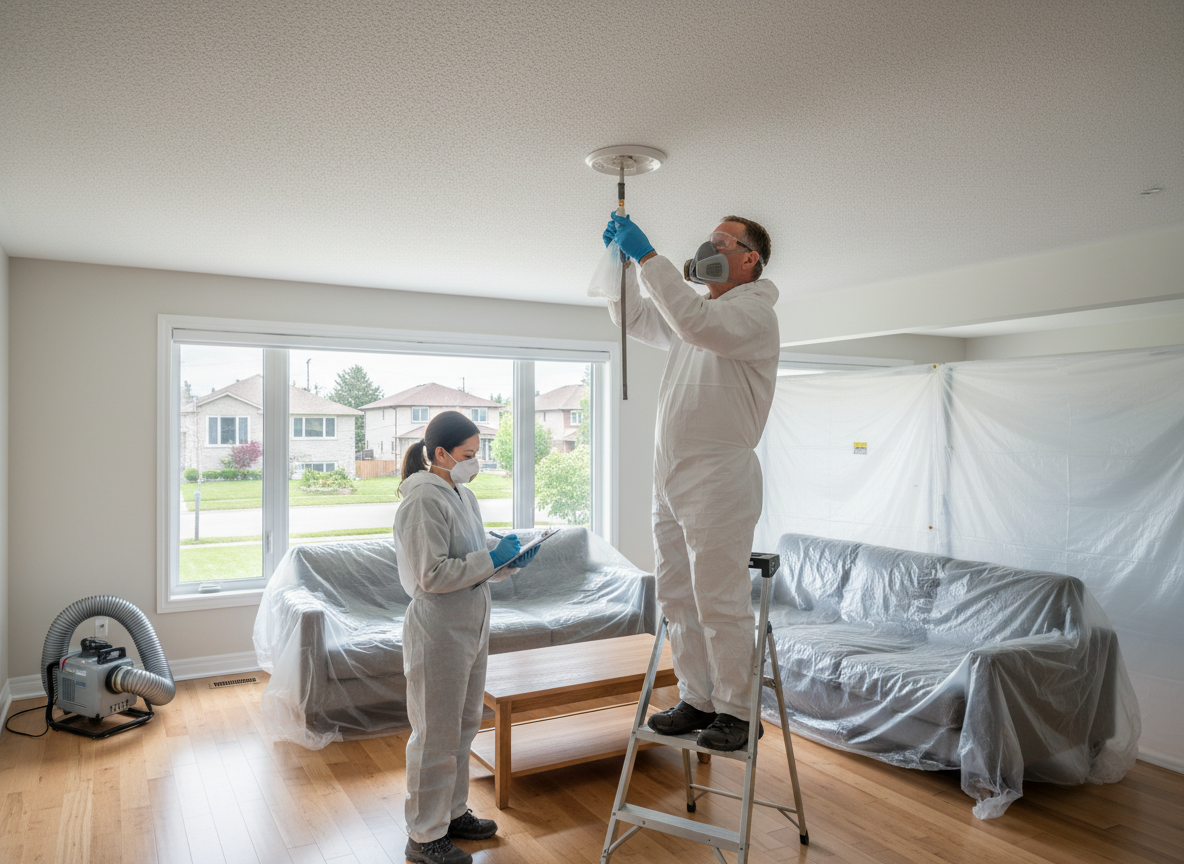
Attic mould can go unnoticed because the space is rarely visited in winter. Ceiling stains on the top floor can be an early clue. Repairs bring trades into the attic, which is when attic signs that call for asbestos sampling also matter.
When Mould Sampling Is Worthwhile
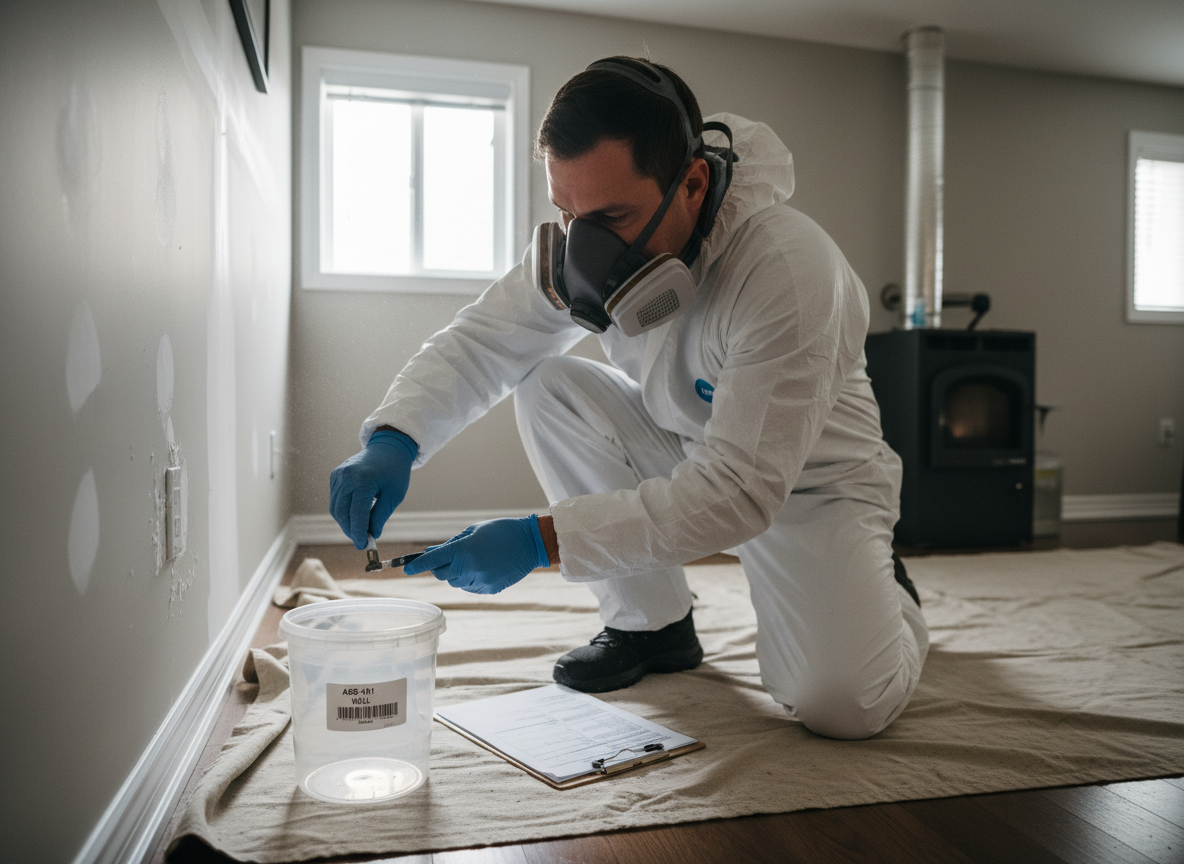
Visible mould usually does not require sampling. Professional assessment focuses first on the affected materials and moisture source. After inspection, a professional may recommend sampling when it will answer a specific unresolved question:
- A persistent musty odour with no visible growth
- Suspected growth behind finished walls or under flooring
- Supporting assessment after residential mould removal when the remediation scope calls for sampling
Air Doctors conducts professional sampling. Accredited laboratories analyze samples, and Air Doctors explains the results to the homeowner. Clearance sampling may be completed after remediation when applicable. Asbestos projects follow a similar before-and-after logic, explained in bulk sampling vs air clearance sampling.
Arrange a Residential Mould Inspection
Heating season mould traces back to moisture. Removing visible growth without correcting condensation, ventilation or air leakage can allow it to return. A mould inspection helps identify affected areas and potential moisture sources.
Air Doctors provides residential mould inspections, sampling and residential mould removal for homeowners. Contact Air Doctors to arrange a professional assessment before disturbing any affected materials.
Frequently Asked Questions About Winter Mould Growth
Why does mould form on window sills in winter?
Repeated condensation keeps sills and caulking damp long enough for growth. Addressing humidity and ventilation targets the cause.
Can heating season mould affect indoor air quality?
Mould growth can release spores and odours into indoor air. A professional assessment helps determine the extent and the source.
Does mould removal fix the problem on its own?
Not usually. A remediation plan should address the moisture source as well as the visible growth to reduce the chance of regrowth.
Does Air Doctors analyze mould samples?
No. Air Doctors collects samples, and accredited laboratories analyze them.
When should a homeowner book a mould inspection?
When musty odours, recurring stains or visible growth appear. An assessment may also help buyers or sellers address suspected moisture problems.

Locations We Serve
© 2026 Air Doctors Inc. | Marketed By MacRAE'S -Local SEO Company