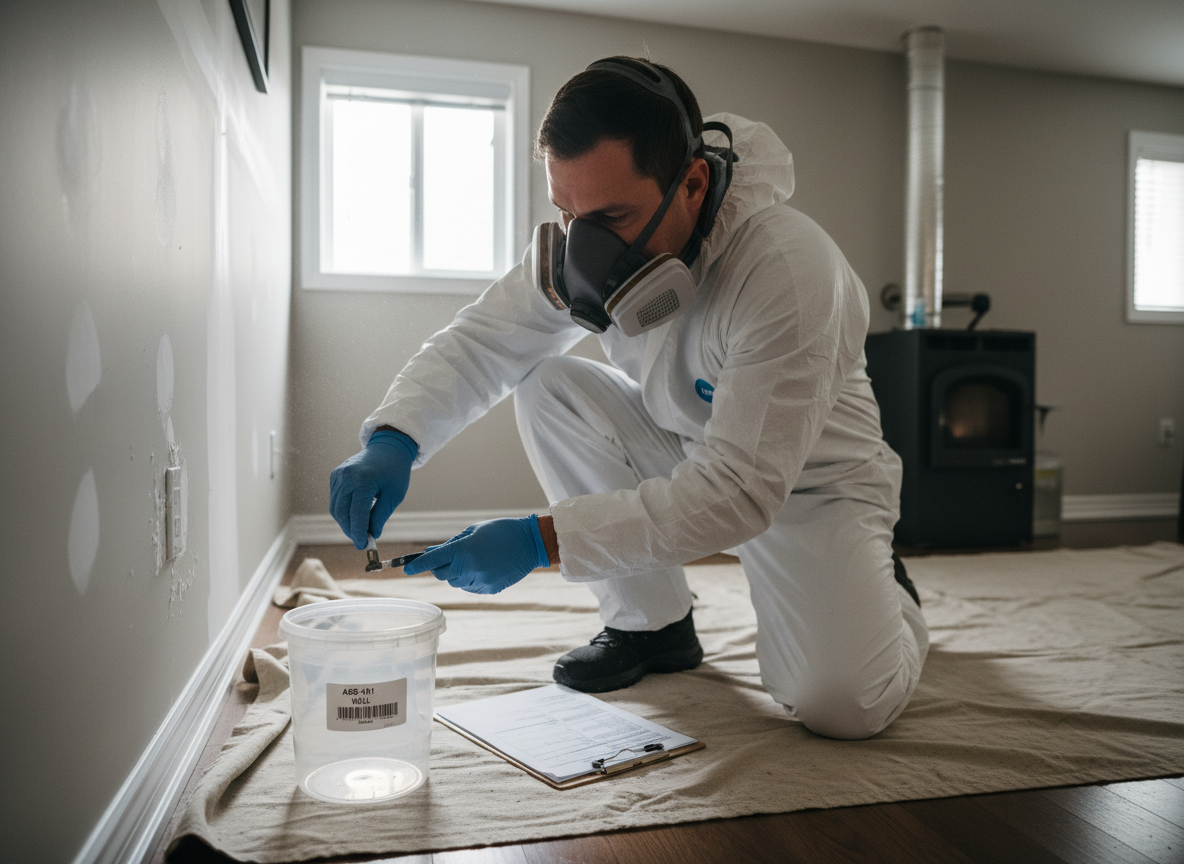
Homeowners planning work in an older home often hear two terms: bulk sampling and air clearance sampling. Both relate to asbestos, but they answer different questions at different stages. Bulk sampling asks whether a material contains asbestos. Asbestos clearance sampling asks whether a work area meets clearance criteria after removal.
People Also Ask
1. Is asbestos bulk sampling the same as asbestos air sampling?
No. Bulk sampling collects a small piece of a suspected material. Air sampling collects airborne particles on a filter.
2. Who analyzes asbestos samples?
Accredited laboratories analyze both bulk and air samples. A trained professional collects and submits them.
Knowing the difference helps homeowners, landlords and buyers plan each step of home asbestos testing with realistic expectations.
What Asbestos Bulk Sampling Involves
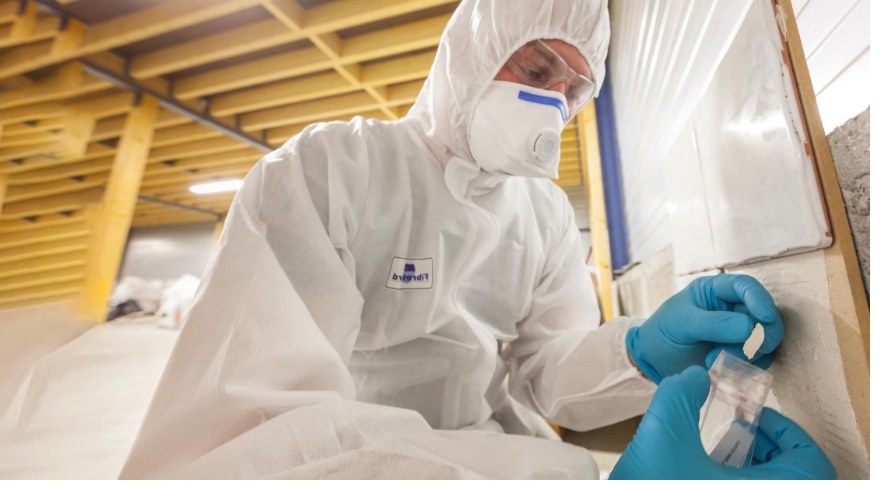
Asbestos bulk sampling involves collecting a small piece of a suspected building material. A trained professional takes the sample under controlled conditions. Each sample is sealed, labelled and recorded with its location.
Materials that may be sampled in older homes include:
- Popcorn or textured ceilings
- Vinyl floor tiles and sheet flooring
- Pipe insulation
- Plaster and drywall joint compound
- Vermiculite attic insulation
A home’s age or a textured ceiling does not prove asbestos. Bulk sampling as part of residential asbestos testing turns that question into evidence. Until then, leave suspected materials undisturbed.
What Air Clearance Sampling Involves
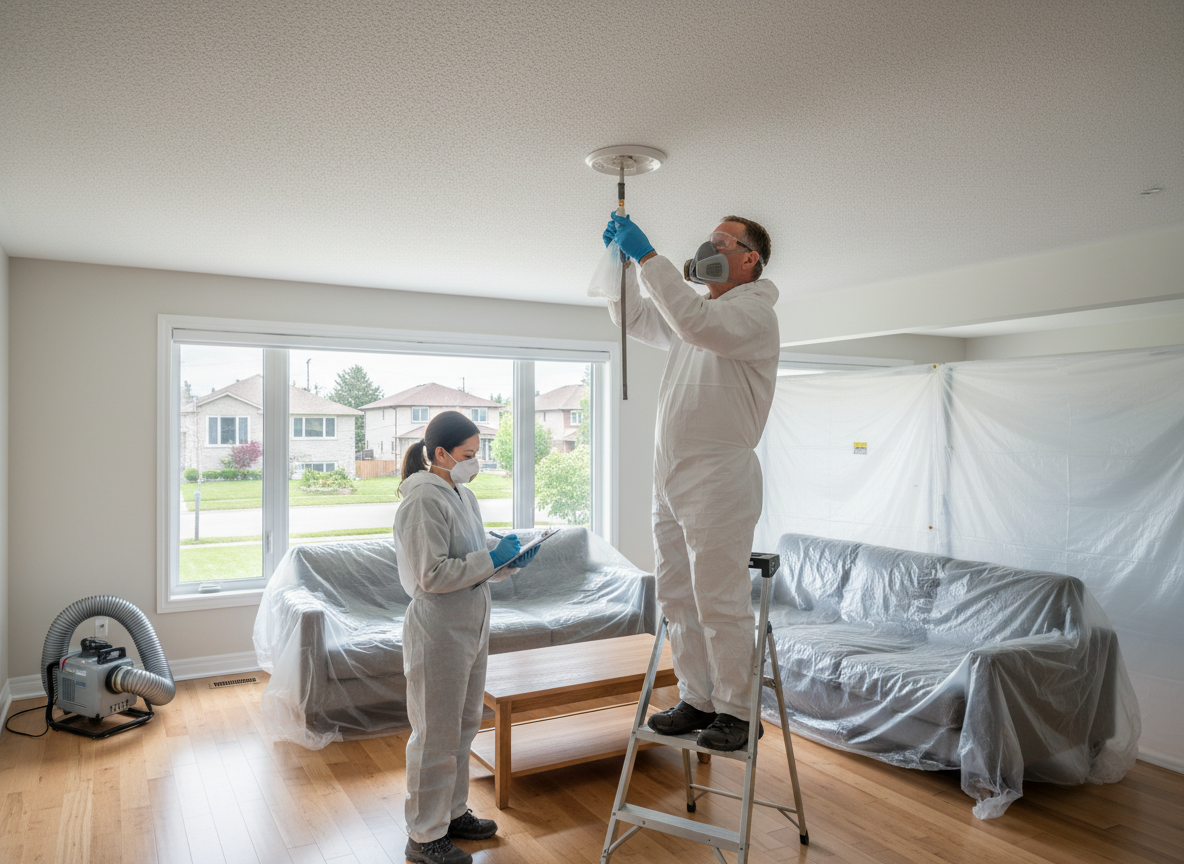
Air clearance sampling takes place after asbestos removal and final cleaning. A professional collects air samples by drawing air from the work area through a filter. Where applicable, samples are collected within the work area while the enclosure remains in place.
Asbestos clearance sampling checks whether airborne fibre levels meet clearance criteria. Passing results support project completion, along with a satisfactory visual inspection and any other applicable requirements.
When Each Sampling Type Applies
Bulk sampling happens before work begins. Typical reasons include:
- Planning a renovation or demolition
- Buying or selling an older home
- Noticing damaged ceilings, flooring or insulation
- Preparing for vermiculite insulation removal
Air clearance sampling happens after removal. Whether it is required depends on the type of removal work and the procedures that apply to it. Some property owners also request it for added documentation.
Put simply, bulk sampling guides the plan. Air clearance sampling verifies the outcome.
How Laboratories Analyze Each Sample
Air Doctors conducts professional sampling. Samples are analyzed by accredited laboratories. The laboratory examines each sample type differently because each answers a different question.
For a bulk sample, the laboratory examines the material to determine whether asbestos is present. The laboratory reports results for each sample submitted.
For asbestos air sampling, the laboratory examines the filter to measure airborne fibre levels. The laboratory then compares those results against the clearance criteria that apply to the work.
What the Results Confirm
Bulk results confirm whether a specific material contains asbestos. A positive result helps determine whether removal is needed and how planned work should proceed. A negative result applies only to the material sampled. Similar materials in another room may still need their own samples.
Air clearance results confirm whether fibre levels in the work area meet the clearance criteria. Results within the criteria support project closeout. Results that fall outside the criteria mean the area is not yet ready to close out, and a professional explains the next steps.
Neither result replaces the other. A passing air result says nothing about untested materials elsewhere in the home.
Choosing the Right Sampling Approach
Most residential projects use both. Each fits a different stage.
| Factor | Asbestos bulk sampling | Air clearance sampling |
|---|---|---|
| Timing | Before work begins | After removal is complete |
| What is collected | A small piece of material | Air drawn through a filter |
| Question answered | Does this material contain asbestos? | Does the work area meet clearance criteria? |
| Main purpose | Planning renovation or removal | Closing out removal work |
A suspicious ceiling ahead of a kitchen renovation calls for bulk sampling first. After basement pipe insulation removal, clearance sampling may be required depending on the work classification and applicable procedures. Many projects include both.
Keep every record. Inspection notes, laboratory results and clearance documentation support future renovations and property sales.
Discuss Sampling Options With Air Doctors
Air Doctors provides residential asbestos inspections, professional sampling, removal and clearance sampling when applicable. Results from the accredited laboratory are explained clearly, so property owners looking for asbestos testing and removal Newmarket, Markham and Durham know the next step.
Contact Air Doctors to discuss the right sampling approach before disturbing any suspected material. Air Doctors also assesses other indoor air concerns, including why mould appears during heating season.
Frequently Asked Questions About Asbestos Sampling Types
1. Can a homeowner collect an asbestos bulk sample?
Collecting a sample disturbs the material. A trained professional should collect it under controlled conditions.
2. Does a negative bulk sample mean a home has no asbestos?
No. The result applies only to the material sampled. Other suspected materials need their own assessment.
3. When is asbestos clearance sampling done?
It is done after removal and final cleaning, before the area returns to normal use.
4. Can air sampling replace bulk sampling?
No. Air samples measure airborne fibres. They cannot identify which materials contain asbestos.
5. Why keep asbestos sampling records?
They document material conditions and completed work. This supports future renovations, property sales and insurance discussions.

Locations We Serve
© 2026 Air Doctors Inc. | Marketed By MacRAE'S -Local SEO Company