Home Asbestos Testing: What to Expect From Inspection to Clearance
Summary Home asbestos testing gives a homeowner a documented answer about a suspect material. A trained professional inspects…
Read More

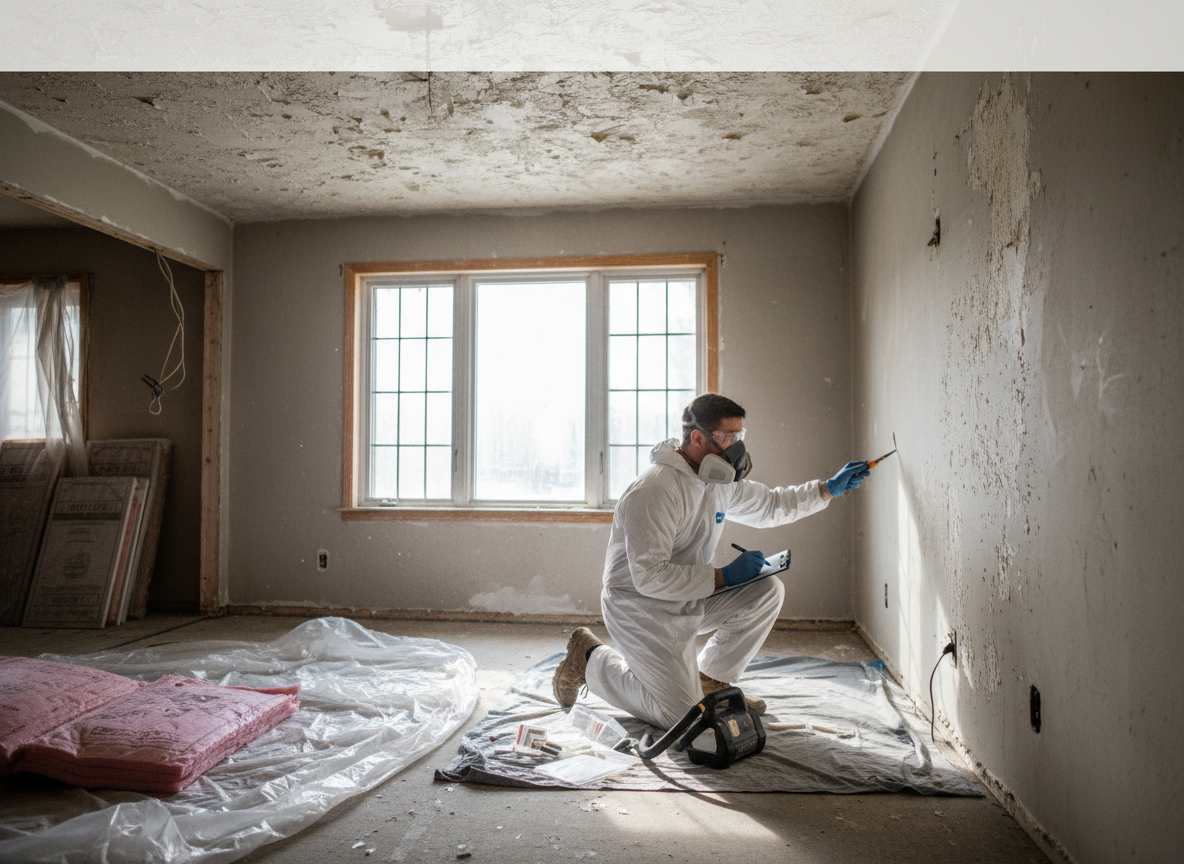
Home asbestos testing gives a homeowner a documented answer about a suspect material. A trained professional inspects the home and collects samples. An accredited laboratory analyzes them. The results then guide the next steps. Air Doctors conducts professional sampling. Samples are analyzed by accredited laboratories.
Testing becomes relevant in a few familiar situations. A renovation is planned in an older home. A contractor opens a ceiling and stops work. Water damage breaks up material that was stable until then. A sale or purchase raises questions about what a future project would involve. In each case, the material is left undisturbed until it has been assessed.
A positive result does not automatically mean removal. Material in good condition that will not be disturbed is often left in place and monitored instead. When removal is warranted, the work is planned around how much fibre release it is likely to cause. Clearance sampling may be completed when applicable. An accredited laboratory analyzes the samples against the applicable clearance criteria. The documentation from the process remains useful long afterward.
Home asbestos testing involves professional inspection and sampling, followed by testing of the collected samples at an accredited laboratory. This matters because the materials involved are ordinary. Ceiling texture, floor tile, pipe wrap, and attic insulation appear in homes of a certain age across Ontario. Routine renovation work can disturb materials that were stable until then.
Homeowners usually arrive at this topic for a practical reason. A contractor stops work after opening a ceiling. A basement floods and the old floor tile lifts. An attic gets quoted for an insulation upgrade, and the installer spots grey brown flakes. In each case, the same question follows: what is in this material, and what happens next?

Construction date is a useful starting clue. Asbestos was widely used in Canadian residential construction until it was phased out. Products containing it stayed in circulation for some time after manufacturing slowed. Asbestos is no longer used in new residential construction. Suspect materials in older homes may need professional assessment before renovation.
Older homes in Newmarket, Markham, Scarborough, Oshawa, and Beaverton may contain materials that warrant assessment before renovation. Many of those homes have been renovated more than once since. That layering is what complicates things. A kitchen floor replaced during a later renovation may sit directly over the original tile floor. The newer surface tells a visitor nothing about what is underneath.
Age alone does not mean a home has a problem. Asbestos in solid, bonded, undamaged material generally stays where it is. Friable material can crumble, pulverize, or become powder under hand pressure when dry. A professional assesses its condition and potential disturbance. Concern also rises when someone plans work that would break a material apart. A sealed vinyl tile floor and a torn section of pipe wrap sit at opposite ends of that range.
Renovation history is worth writing down before an inspection. Permit records, past invoices, and the approximate dates of earlier flooring and ceiling work all help. They let a technician narrow the search and sample the right materials. Many homeowners inherit a house with none of that paperwork, which is normal. The inspection then works from what is visible and from the apparent construction era of each area. Additions, converted attics, and finished basements often date from a different period than the original structure.
Older homes often raise several indoor environment questions at once. Persistent condensation can contribute to mould growth, which is why mould often appears during heating season. Any assessment should also address the moisture source.
Asbestos was valued for heat resistance, strength, and low cost. That led to its use in many ordinary building products. The materials below come up often in residential inspections.
Vermiculite deserves its own note. Some vermiculite insulation has been found to contain asbestos. Not all of it does, but older vermiculite insulation is treated as though it may. Leave suspected vermiculite insulation undisturbed and arrange a professional assessment before attic work. Conditions up there, from disturbed insulation to storage traffic across the joists, are among the attic signs that call for asbestos sampling before a project starts.
A caution applies to these materials. Age, colour, and texture can suggest a material is suspect, but they do not confirm anything. Products that look identical can return different laboratory results.
Professional assessment is appropriate when suspect material is damaged or planned work may disturb it. Laboratory testing may follow professional sampling. Assessment also helps when a decision depends on knowing what is in the house. It is not needed simply because a house is old.
Before renovation or demolition. This is a common and important trigger. Ontario regulates work that disturbs asbestos in a building, and contractors must follow those rules. Assessment before demolition helps identify materials that may affect the work plan.
An asbestos inspection starts with a walkthrough and a conversation about the planned work. The professional then advises whether sampling is appropriate and which materials it should cover.
After water damage or physical damage. A burst pipe, a roof leak, or a flooded basement can break up materials that were stable for a long time. Wet or sagging ceiling texture, lifting floor tile, and crushed pipe wrap justify an inspection before cleanup begins.
During a purchase or sale. A standard home inspection generally does not include asbestos sampling. Confirm the inspection scope with the provider. Buyers looking at an older backsplit often want to know what a future kitchen renovation involves. Sellers sometimes arrange sampling for the same reason. A documented result answers a question that would otherwise stall a negotiation.
Before insulation and energy upgrades. Adding insulation, air sealing an attic, or running new wiring through an attic floor means working directly in the material of concern.
At rental turnover. Vacancy is a practical window for this work, because the unit is empty and scheduling is flexible. Landlords planning unit refreshes often arrange sampling during turnover. There is also a reasonable case for doing nothing. Material in good condition, sealed behind a finished surface and not part of any planned work, is usually left alone and monitored. Removal is not automatically the safer choice because it disturbs the material. Monitoring means checking the material from time to time and acting if its condition changes. The decision depends on condition and intent, not age alone.

Residential asbestos sampling starts with an inspection, not a sample container. A technician walks the home, notes the construction era, identifies suspect materials, and checks their condition. The technician also discusses the planned work. The professional considers the planned work, material condition, and inspection scope when deciding where sampling is appropriate.
The number of samples depends on the material and the scope of work. Different materials require separate samples, because a result from a floor tile says nothing about the ceiling above it. Layered assemblies need attention too. A floor might involve tile, backing, and adhesive, each of which can return a different result. Homogeneous materials spread over a large area may need additional samples.
Collection itself is controlled work, which is why it belongs with a trained technician. The objective is to take a representative piece of material while releasing as few fibres as possible. A trained professional collects samples using controls appropriate to the material and site conditions. The technician explains any access restrictions required during sampling.
Homeowners often ask what the visit itself involves. The inspection and the conversation around it are a large part of the process. The technician explains where sampling may affect finishes and how those locations will be addressed. Furniture may need to be pulled away from a wall or a section of flooring. Access to attics, crawl spaces, and mechanical rooms has to be clear before the technician arrives. Photographs and a written material inventory normally accompany the samples. A report that names the room and the material is more useful later than one that gives no location.
What a homeowner receives at the end of the visit varies with the scope. Photographs often accompany it. List anything outside the scope as well, so the record shows what was assessed and what was not.
Samples travel with a chain-of-custody record. It identifies where each one came from, who collected it, and when. That record is what ties a laboratory result back to a specific spot in a specific room. Laboratories rely on it. So does anyone reading the report later, including a contractor, an insurer, or a buyer’s lawyer.
Air Doctors conducts professional sampling. Samples are analyzed by accredited laboratories. The company that inspects and collects samples is not the same entity that runs the analysis. Keeping those roles separate helps make the results credible.
Samples collected in a home are sent to an accredited laboratory. The laboratory, not the company that collected the samples, determines whether asbestos is present and what type it is.
For bulk material samples, the usual approach is polarized light microscopy. During that analysis, an analyst:
Identified asbestos types include chrysotile, amosite, and crocidolite.
Polarized light microscopy has limitations at very low concentrations. Additional analysis may be necessary when results are borderline. The same applies when a material contains very fine fibres. The accredited laboratory determines whether additional analysis is appropriate for the material and findings. Vermiculite requires careful interpretation. The professional and laboratory should explain the limitations of the sampling and analysis.
Air samples require a different approach. Phase contrast microscopy is used during and after asbestos abatement work. It counts fibres collected on a filter. It does not identify whether each counted fibre is asbestos. Transmission electron microscopy can be used when that confirmation is required.
For residential projects, laboratory analysis confirms the presence of asbestos in a suspect material. Visual comparisons, material age charts, and informal opinions can only indicate that asbestos may be present. A laboratory analysis produces a written result instead. Contractors, insurers, and regulators can act on a written result, which is why the laboratory step is not a formality.

A laboratory report lists each sample and each layer within that sample. It states whether asbestos was detected, which type, and an estimate of how much is present. It is short, technical, and easy to misread without context.
Ontario requirements guide how asbestos containing materials are managed. A qualified professional interprets the laboratory findings for the planned work. A borderline result still deserves a conversation. Low level findings and vermiculite results call for more caution than the result alone suggests.
A result of “none detected” applies to the specific sample analyzed, not to the entire house. If a technician sampled the basement pipe wrap and nothing else, the ceiling texture upstairs remains unknown. This is a common misunderstanding among homeowners who receive a clean report and assume the whole home is cleared.
A short example shows why layers matter. A flooring sample from an older kitchen can come back as separate lines. The vinyl tile, the paper backing, and the mastic beneath are each reported separately. Asbestos may be detected in some of those layers and not others. Nothing visible from the surface predicted that split. It also changes the scope of the work, because lifting the tile alone would leave the layers beneath it bonded to the subfloor.
The report does not describe condition, exposure, or urgency. It confirms the content. The practical next step comes from combining that content with other factors. Where the material sits, what shape it is in, and what work is planned all matter. Intact floor tile in a laundry room with no renovation planned is one situation. The same tile in a room about to be gutted is another. The reasonable decision differs between them.
A professional should explain the laboratory findings, sampling scope, and implications for the planned work in plain language. Homeowners should expect a walkthrough of which materials returned asbestos and which did not. The reasonable options usually come down to leaving the material undisturbed and monitoring its condition, or arranging professional removal. A good explanation also covers what was not sampled. Materials left outside the scope stay unknown, and saying so plainly is more useful than implying the whole house has been cleared.
When asbestos removal is the right call, the work is planned around how likely it is to release fibres. Handling material that stays intact sits at one end of that range. Friable work sits at the other end, including sprayed textures, deteriorated pipe insulation, and loose vermiculite in attics. Required controls depend on the material, its condition, the work method, and the scope of disturbance.
Control measures scale with the work. Higher risk work can involve:
The contractor explains how they will protect furnishings and whether ventilation systems require isolation or shutdown. Occupancy arrangements depend on the job scale and the areas involved.
Scheduling is part of the planning as well. The contractor should set out how long access to the area will be restricted and which parts of the home remain in use.
Clearance sampling may form part of project completion when applicable. After removal and final cleaning, a visual inspection checks the area for visible debris and dust. Where clearance air sampling is required, a qualified professional collects samples under the applicable procedures. An accredited laboratory analyzes those samples. The barriers come down once the applicable criteria are met.
Bulk sampling at the start and air clearance sampling at the end answer different questions, and it is easy to mix them up. Bulk sampling identifies what a material contains. Laboratory analysis of clearance air samples assesses whether the work area meets applicable clearance criteria.
Documentation should follow. A complete file typically includes the laboratory report, the scope of work performed, waste disposal records, and clearance results. Keeping those records together matters more than it seems. That paperwork has a long life. A future buyer’s agent, insurer, or renovation contractor may ask for it later.
Homeowners can compare residential asbestos removal companies by asking about sampling, laboratory analysis, scope, and documentation. A few questions separate them quickly.
Does the company work in homes? Residential projects involve occupied space, family schedules, pets, finished surfaces, and access through living areas. Ask how much of the company’s work is residential. Ask how a crew handles a house that people are still living in.
Do you keep sampling and laboratory analysis separate? Ask which accredited laboratory analyzes the samples and whether they will provide the original laboratory report. A summary is not the same as the report itself.
Is the scope written down before work starts? The proposal should state which materials are being removed and how the work will be carried out. It should also cover the containment approach, disposal arrangements, and whether it includes clearance sampling.
Is the company insured and carrying workplace coverage? Coverage matters when work is being carried out on the property, and it’s reasonable to ask about before signing.
What documentation is provided at the end? Confirm this before signing, not after the crew has left. The laboratory report and the clearance results are the parts worth having in writing.
How does the company communicate? Useful contractors explain the material, the options, and the regulatory context calmly. They are willing to say that a material can be left undisturbed when that is the honest answer. Pressure to remove everything found is worth noticing, and so are vague answers about laboratories and regulations.
Home asbestos testing is a sequence of steps, not a standalone event. A material raises a question. A professional inspects the home and collects samples. An accredited laboratory analyzes them, and a professional explains the results. Removal happens if it is warranted. Where applicable, clearance sampling supports project completion. Retain relevant documentation with the property records.
A useful step before that sequence begins is simple. Leave suspect material undisturbed while arranging professional assessment. Schedule that assessment before any cutting, sanding, or demolition. Unplanned disturbance may change the cleanup scope and required controls.
Air Doctors provides residential inspections, professional sampling, asbestos and vermiculite removal, mould removal, and clearance sampling, with accredited laboratories analyzing samples. Contact Air Doctors to arrange a residential inspection before work begins.


© 2026 Air Doctors Inc. | Marketed By MacRAE'S -Local SEO Company