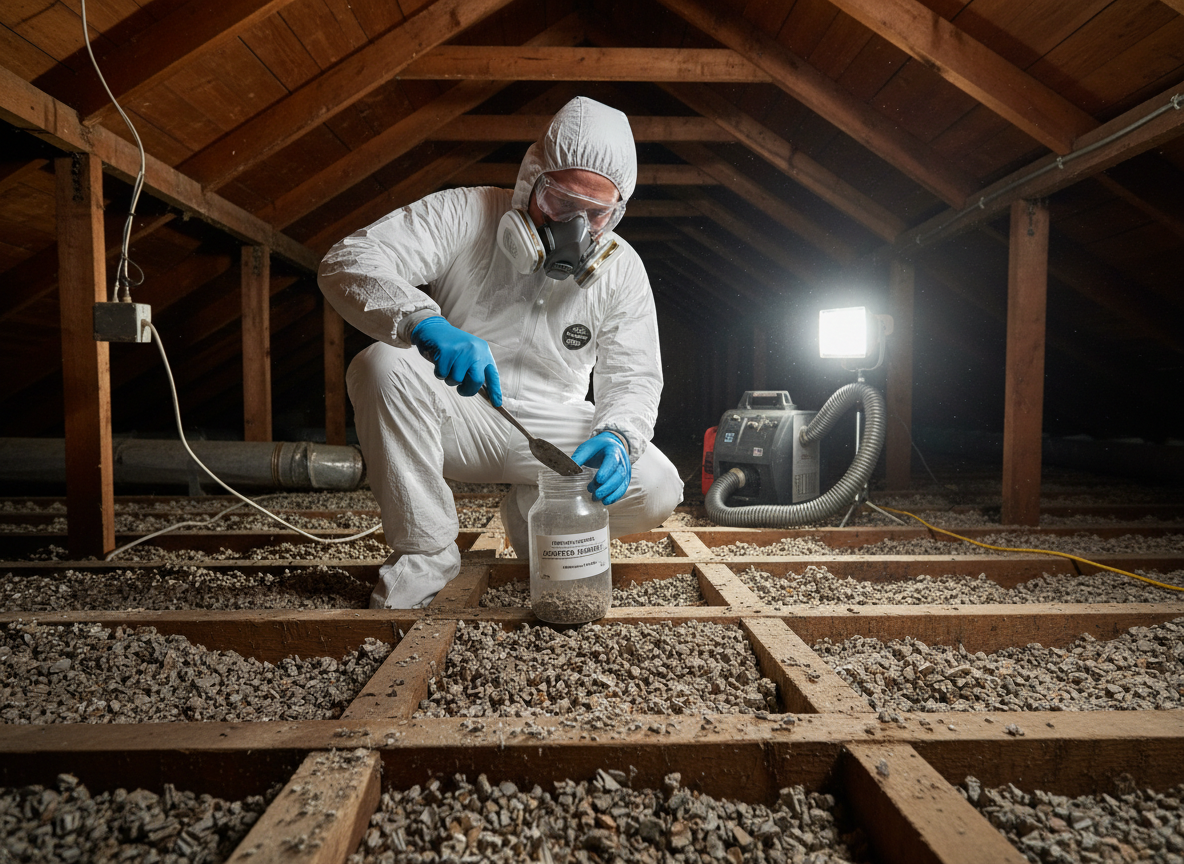
Older homes often contain building materials that were once considered safe and effective but may now require closer evaluation. Vermiculite insulation is one example. Found primarily in attics, this loose-fill insulation was widely used in residential construction for decades. Today, homeowners frequently encounter it during renovations, home inspections, or roof repairs.
Understanding the role of testing helps property owners make informed decisions about safety, renovation planning, and the removal of vermiculite insulation.
People Also Ask (PAAs)
What does vermiculite insulation look like in an attic?
Vermiculite insulation typically appears as small, lightweight granules with a silver-gold, grey-brown, or shiny pebble-like appearance. Because appearance alone cannot confirm the presence of asbestos, professional sampling and laboratory analysis are recommended.
Does all vermiculite insulation need to be removed?
Not necessarily. The need for vermiculite insulation removal depends on factors such as the material’s condition, planned renovations, and laboratory findings. Professional assessment helps determine whether removal is necessary or if the insulation can remain safely undisturbed.
What Is Vermiculite Insulation?
Vermiculite is a naturally occurring mineral that expands when heated. Because it is lightweight and fire-resistant, it has become a popular insulation material in homes throughout North America.
Vermiculite insulation often appears as small pebble-like granules with a silver-gold or grey-brown colour. While the material itself is not always hazardous, some vermiculite products may contain asbestos fibres due to historical mining and manufacturing practices.
Since asbestos cannot be identified through visual inspection alone, professional testing remains the only reliable way to determine whether a concern exists.
Why Vermiculite Testing Matters
Many homeowners first learn about vermiculite insulation during a property inspection or before beginning an attic renovation. Testing provides clarity about the material and helps determine whether additional action is necessary.
Professional assessment offers several benefits:
- Identifies potential asbestos-containing materials
- Supports safer renovation planning
- Helps protect indoor air quality
- Provides documentation for real estate transactions
- Reduces uncertainty during home inspections
Testing also allows homeowners to avoid unnecessary disruption if the material does not require further action.
When Vermiculite Insulation Removal May Be Necessary
Not all vermiculite insulation requires immediate removal. The condition of the material and future plans for the home often influence the next steps.
Vermiculite insulation removal may be considered when:
- Attic renovations are planned
- Roofing projects may disturb insulation
- Electrical or HVAC work requires attic access
- Laboratory analysis confirms asbestos contamination
- The material has been damaged or disturbed
A professional assessment helps determine whether removal is appropriate and what safety procedures should be followed.
Understanding the Risks of Disturbing Vermiculite
One of the biggest concerns involves disturbing insulation during home improvement projects. Activities such as moving storage boxes, installing lighting, or accessing attic spaces can disturb the material and release dust into the air.
If asbestos fibres are present, these fibres may become airborne and spread throughout the home.
For this reason, suspected vermiculite insulation should remain undisturbed until professional sampling is complete. Attempting to handle or collect samples without proper controls may increase exposure risks and create additional contamination concerns.
The Professional Approach to Vermiculite Removal
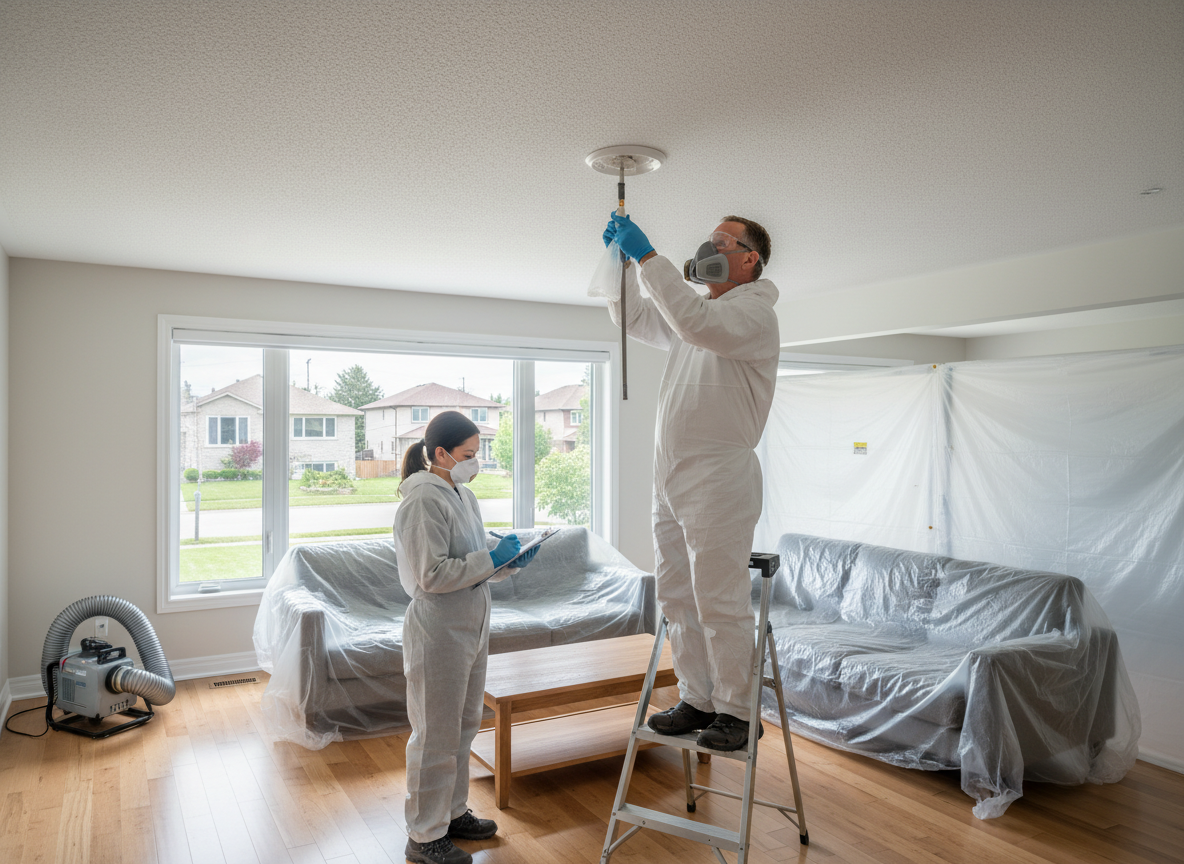
When laboratory findings indicate that removal is necessary, trained professionals follow strict procedures designed to protect the home and its occupants.
A typical vermiculite removal project may include:
- Containment of the work area
- Negative air pressure systems
- Controlled material extraction
- Secure waste packaging and disposal
- Air clearance verification following removal
These procedures help prevent dust from spreading and support a safe residential environment throughout the project.
Protecting Property Value Through Early Assessment
Vermiculite insulation can become a concern during property sales, refinancing, or renovation planning. Uncertainty about attic insulation may undermine buyer confidence and delay negotiations.
Proactive assessment helps homeowners address potential concerns before they become larger issues. Clear documentation and professional recommendations provide valuable information for future property transactions and home improvement projects.
Also Read:
How Vermiculite Testing Protects Real Estate Value and Health
Does Your Attic’s Vermiculite Contain Asbestos? Have It Tested with Air Doctors’ Professionals Today!
Moving Forward with Confidence
Vermiculite insulation remains a common finding in older residential properties. While visual identification can raise concerns, only professional vermiculite testing can determine whether asbestos fibres are present and what steps should be followed. Early assessment helps protect household safety, supports informed renovation decisions, and provides peace of mind for homeowners planning for the future.
Concerned about attic insulation in an older home? Contact Air Doctors to schedule a professional vermiculite sampling consultation and identify potential risks early.



Locations We Serve
© 2026 Air Doctors Inc. | Marketed By MacRAE'S -Local SEO Company