What Is Vermiculite and Why Is It Found in Homes?
Many older homes still contain vermiculite insulation in attic spaces. Vermiculite was widely used because it was lightweight, fire-resistant, and helped improve thermal efficiency in residential properties.
One of the most commonly recognized forms was Zonolite insulation, which was installed in millions of homes. During modern home inspections, this material continues to appear frequently in older residential properties.
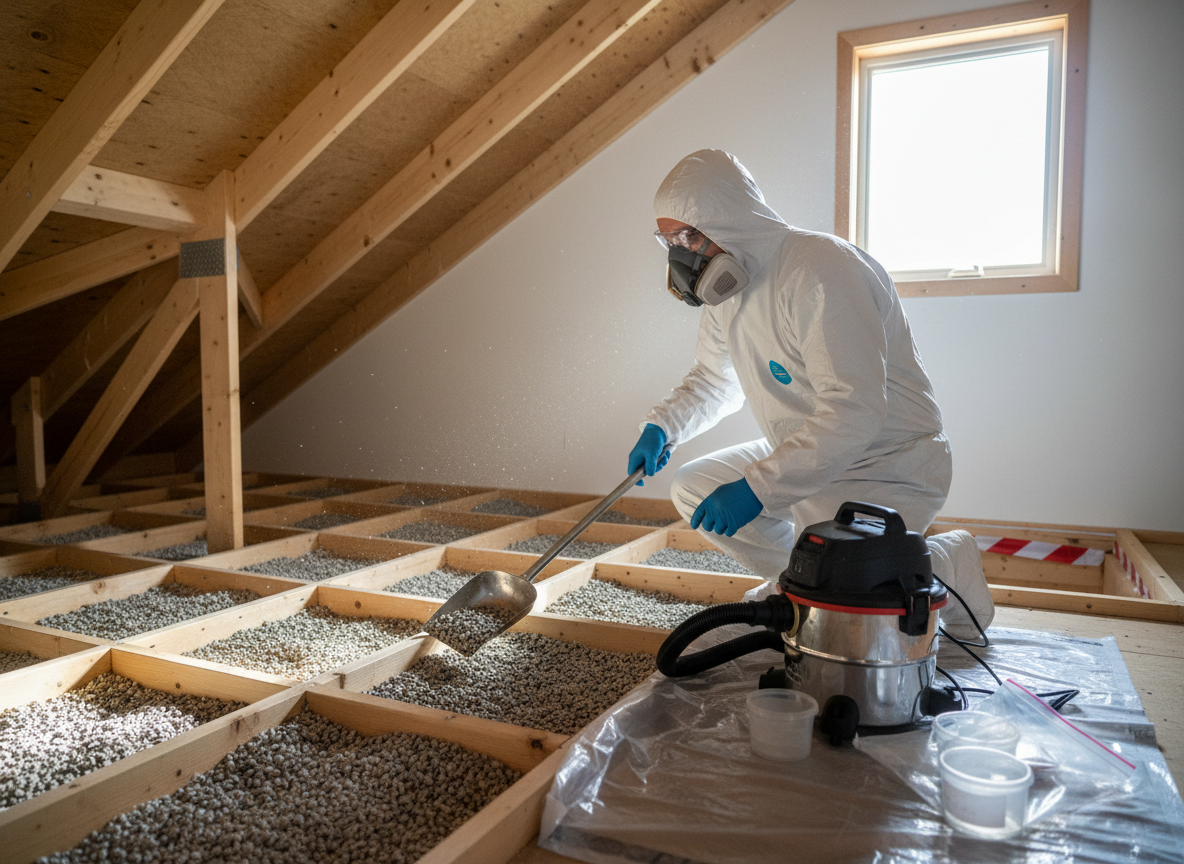
Visually, vermiculite insulation often resembles small pebble-like pieces with a silver-gold or grey-brown appearance. The material may look shiny or layered, similar to mica flakes. While visual signs may raise concern, suspected insulation should never be touched, moved, or disturbed without professional vermiculite testing and assessment.
People Also Ask (PAAs)
How can homeowners identify vermiculite insulation in the attic?
Vermiculite insulation often appears as small pebble-like material with a silver-gold or grey-brown colour. It may resemble shiny flakes or lightweight granules. Suspected insulation should never be touched or disturbed without professional assessment and sampling.
Why is professional vermiculite sampling important before renovations?
Renovation work can disturb insulation and release asbestos fibres into the air if asbestos is present. Professional sampling helps determine whether hazardous materials exist before attic work, roof repairs, or home additions begin.
The Risks of Disturbing Friable Materials
One of the primary concerns surrounding vermiculite insulation is that some materials may contain asbestos fibres. When disturbed, microscopic fibres can become airborne and circulate throughout the home.
Activities that may disturb attic insulation include:
- Renovation work
- Electrical upgrades
- Roof repairs
- Moving attic storage boxes
- Installing lighting or ventilation systems
Vermiculite insulation is considered “friable,” meaning it can crumble easily and release dust into the environment. Once airborne, fibres may remain suspended for long periods and spread through residential living spaces.
For this reason, intact insulation should remain completely undisturbed until a professional vermiculite testing and sampling process is completed.
Why Professional Vermiculite Testing Matters for Real Estate and Health
Suspected vermiculite insulation often complicates real estate transactions. Home inspections may identify attic insulation concerns that can affect buyer confidence and delay negotiations.
Unverified insulation may lead to:
- Reduced property appraisals
- Delayed home closings
- Conditional purchase agreements
- Lower buyer offers
- Increased inspection requests
A proactive assessment helps remove uncertainty before listing a residential property. Proper sampling and laboratory analysis provide clarity regarding whether asbestos fibres are present.
Professional vermiculite assessment also supports indoor environmental safety by identifying potential risks before renovation or maintenance work begins.
The Dangers of DIY Approaches and Unsafe Sampling
Attempting to collect attic samples without professional controls creates serious risks. Disturbing suspected asbestos-containing insulation without protective procedures may contaminate the entire residential environment.
DIY handling may result in:
- Airborne fibre spread through ventilation systems
- Cross-contamination of living areas
- Increased cleanup complexity
- Significantly higher remediation costs
Professional handling is important because trained personnel follow controlled procedures designed to reduce disturbance and protect indoor spaces.
Suspected vermiculite insulation should never be vacuumed, swept, or manually collected by homeowners.
The Vermiculite Testing Process: Professional Sampling vs. Laboratory Analysis
Safe and Compliant Bulk Sampling by Professionals
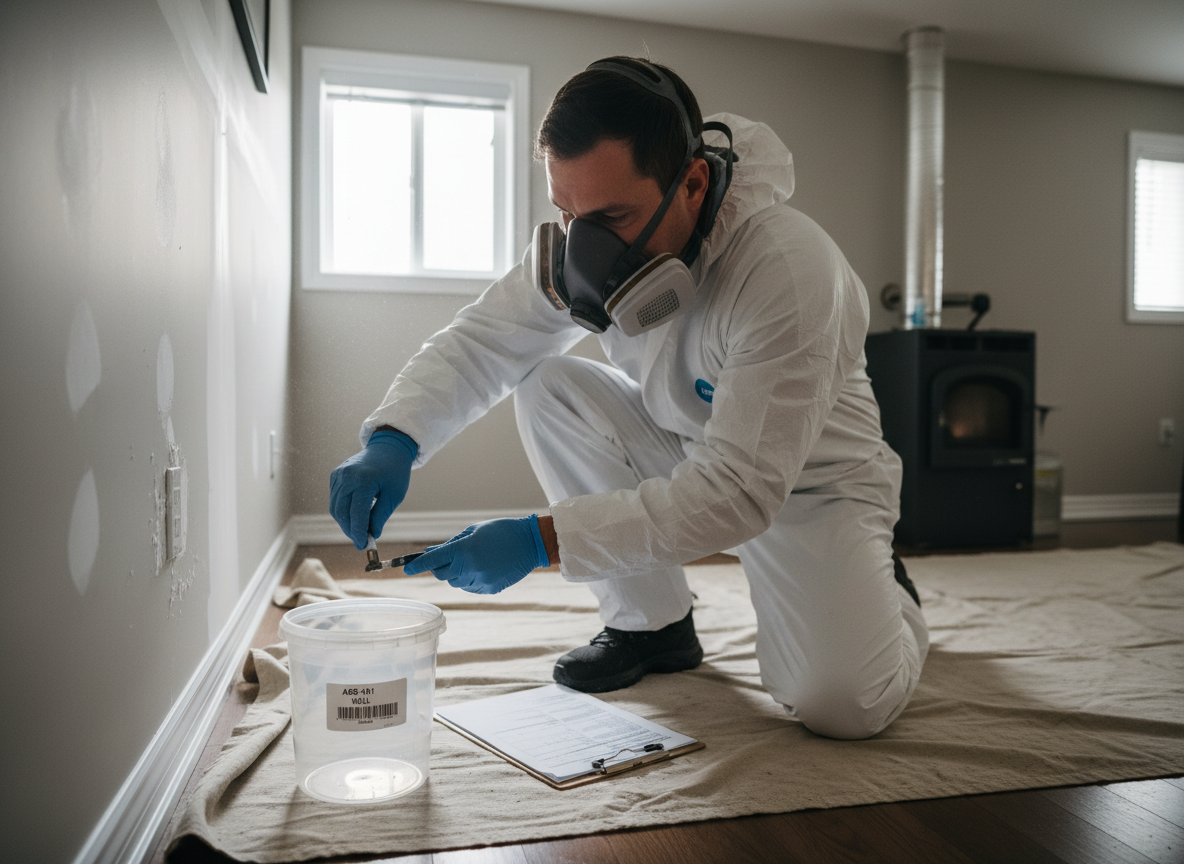
Professional vermiculite sampling involves carefully collecting attic material from multiple areas while minimizing fibre disturbance.
Air Doctors completes the sampling process, while certified laboratories conduct the actual testing and analysis.
During professional collection procedures, trained personnel may use:
- Proper personal protective equipment (PPE)
- Controlled dust-suppression techniques
- Amended water misting methods
- Sealed collection containers
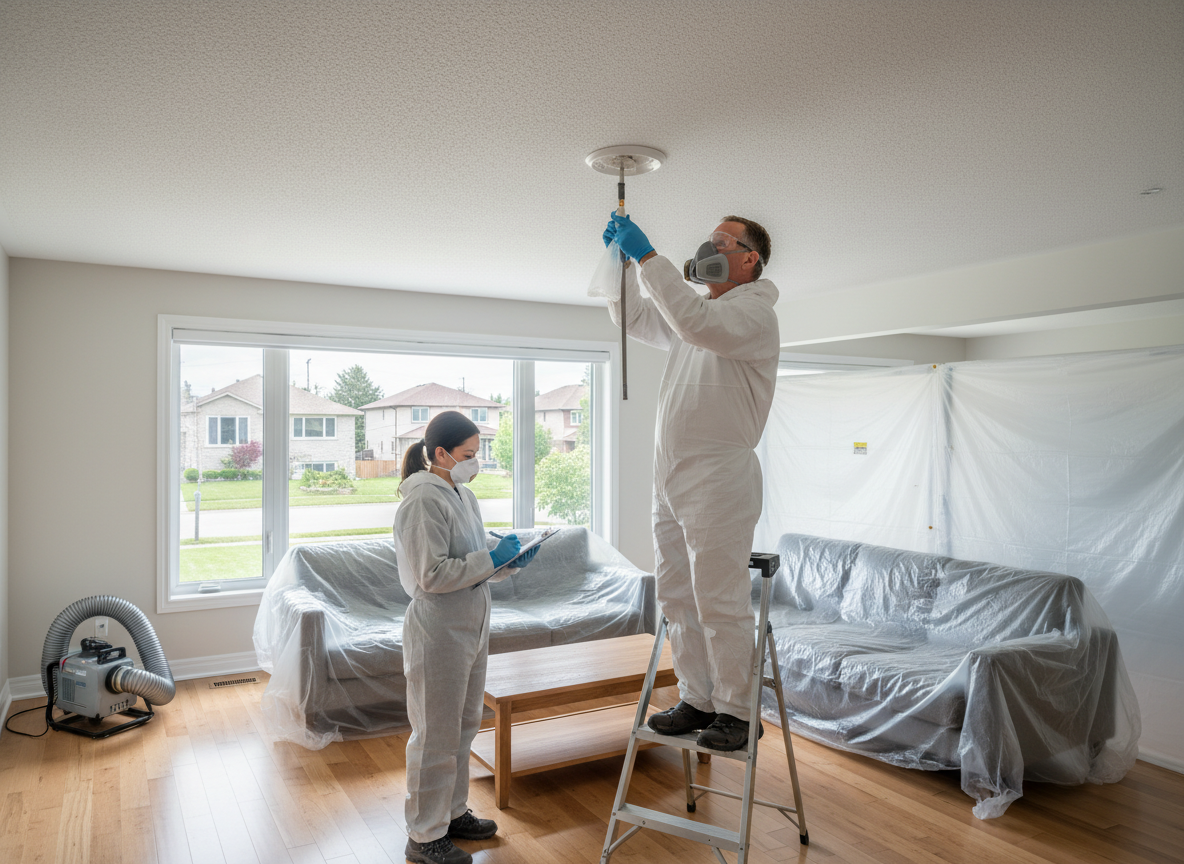
- Residential containment precautions
Sampling procedures follow provincial residential safety guidelines designed to reduce the risk of cross-contamination inside the home.
This controlled approach allows attic materials to be assessed safely without unnecessarily exposing household occupants.
Accredited Laboratory Analysis Methods
Once samples are collected, they are securely submitted to accredited laboratories for detailed analysis.
These laboratories use specialized methods to determine whether asbestos fibres are present within the insulation material. Accredited labs follow strict quality assurance protocols to maintain highly accurate residential sample analysis.
Laboratory testing helps provide:
- Accurate fibre identification
- Legally defensible documentation
- Reliable reporting standards
- Clear confirmation of material composition
Because laboratory analysis follows regulated procedures, homeowners receive reliable information to guide future decisions about attic insulation.
Interpreting the Laboratory Assessment Report
Laboratory reports provide homeowners with detailed findings regarding the attic insulation sample.
The report may determine:
- Whether asbestos fibres are present
- The concentration of asbestos within the material
- Recommended safety protocols moving forward
If asbestos-containing vermiculite is confirmed, the findings help determine whether professional vermiculite removal is necessary before renovation or occupancy changes occur.
The report also helps establish the containment and clearance requirements needed to complete the removal safely and in compliance with applicable requirements.
Securing Home’s Value with Expert Vermiculite Testing
The Long-Term Benefits of Professional Remediation
Professional vermiculite sampling, accredited laboratory analysis, and controlled removal procedures provide long-term benefits for residential properties.
These steps help:
- Protect indoor air quality
- Support safer renovation planning
- Preserve property value
- Reduce future transaction concerns
- Improve buyer confidence during resale
Certified air clearance and modern re-insulation also provide reassurance that the home environment has been professionally restored.
Resolving insulation concerns early removes a significant obstacle that may otherwise complicate future property sales.
Also Read:
10 Facts About Vermiculite Testing Every Homeowner Should Know
Does Your Attic’s Vermiculite Contain Asbestos? Have It Tested with Air Doctors’ Professionals Today!
Taking the First Step Toward a Safe Home
Older residential properties in areas such as Markham, Durham, and Oshawa may still contain vermiculite insulation hidden within attic spaces.
Visual identification may raise concerns, but professional sampling remains the only reliable way to confirm whether asbestos fibres are present.
Before beginning attic renovations, roof repairs, or home additions, scheduling a professional residential sampling consultation can help protect both property value and household safety.
Contact Air Doctors for professional vermiculite insulation removal and sampling services to support safer residential environments.

Locations We Serve
© 2026 Air Doctors Inc. | Marketed By MacRAE'S -Local SEO Company