Older homes can offer established neighbourhoods, mature properties, and features that are difficult to find in newer construction. They can also contain building materials installed before asbestos use declined and modern construction practices became common.
For buyers, the challenge is that asbestos cannot be reliably identified by appearance alone. Vermiculite insulation may also contain asbestos, depending on its source. Certain features can indicate that further professional assessment is worth considering before moving forward with a purchase.
Here are six older home red flags buyers should understand.
1. The Home Has a Textured Popcorn Ceiling That Has Never Been Tested
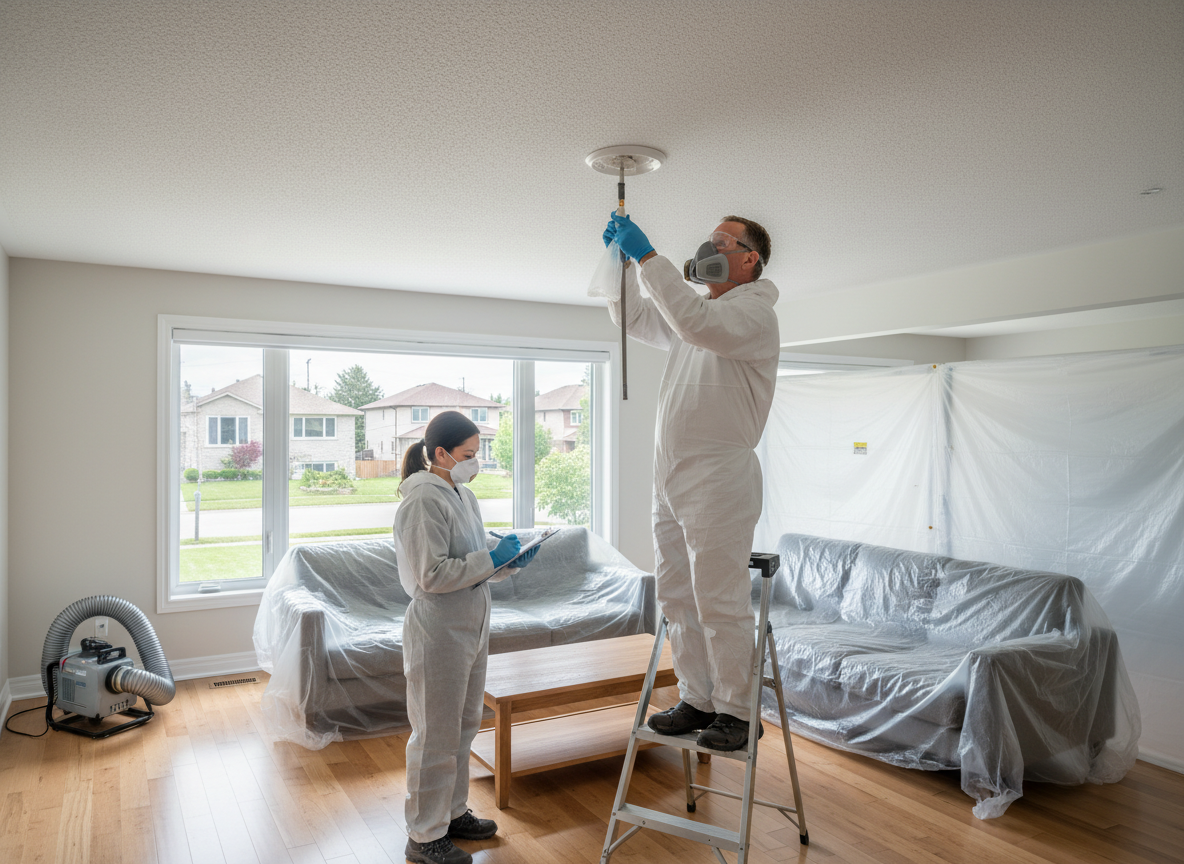
Textured or popcorn ceilings are common in many older homes. Some ceiling materials installed in previous decades may contain asbestos, but a textured finish does not confirm it.
If the ceiling’s history is unknown and future renovations could disturb it, professional assessment can provide clarity.
Where sampling is appropriate, Air Doctors can collect samples for submission to an accredited laboratory. Laboratory analysis determines whether asbestos is present in the sampled material.
2. The Attic Has Loose, Pebble-Like Insulation
Some older homes have loose-fill vermiculite insulation in their attics. It can have a lightweight, granular appearance and may resemble small pebbles.
Not all vermiculite insulation contains asbestos. However, some historically installed vermiculite products were contaminated with asbestos, making appearance alone insufficient to determine whether the material presents a concern.
Buyers who receive information indicating that vermiculite is present can arrange professional vermiculite testing before deciding whether to remove it.
Suspected insulation should remain undisturbed until it has been professionally assessed.
3. The Home Was Built or Last Renovated Before the 1990s
The age of a home provides useful context when evaluating possible asbestos containing materials.
Older construction may include materials such as textured ceiling finishes, flooring, insulation, pipe coverings, and other products that warrant assessment before renovation or removal.
Age alone does not establish a hidden asbestos home purchase concern. A pre 1990s construction or renovation date should instead prompt buyers to ask what original materials remain and whether previous assessments or laboratory results are available.
A pre purchase asbestos inspection can help clarify concerns identified during the buying process.
4. There Is Evidence of Previous Renovations in Older Areas of the Home
Renovation history matters almost as much as construction age.
An older home may have undergone several updates over decades. Records may not always show which materials were removed, what remained in place, or whether suspect materials were professionally assessed before previous work began.
This does not mean previous renovations were unsafe.
It does mean buyers should avoid making assumptions about what is behind newer finishes. When the renovation history is unclear, available permits, invoices, inspection records, and laboratory reports may provide useful context.
Professional assessment may be appropriate if future renovations will disturb older or unidentified materials.
5. The Basement or Mechanical Room Contains Older Pipe or Duct Wrapping
Basements and mechanical areas can contain older insulation and wrapping around pipes, ducts, boilers, or other building systems.
Some historical insulation products contained asbestos. Their age, location, or appearance, however, cannot confirm asbestos content.
Buyers should avoid disturbing suspect wrapping to investigate it.
If an inspector identifies older insulation as a concern, professional sampling can establish whether laboratory analysis is warranted before renovation or removal work proceeds.
6. Information About Past Renovations Is Limited
A vague renovation history does not necessarily mean a seller is concealing a problem. Records can be incomplete, particularly when a property has changed ownership several times.
However, limited information gives buyers fewer facts about the materials that may remain in the home.
Useful questions during the buying process include whether previous asbestos or vermiculite assessments were completed and whether laboratory or remediation documentation is available.
When documentation cannot answer those questions, a professional assessment can provide more reliable information than assumptions based on appearance alone.
Know Before Renovation Work Begins
Popcorn ceilings, vermiculite insulation, older pipe coverings, and a pre 1990s construction date are not proof that a home contains asbestos. They are indicators that additional assessment may be appropriate.
For buyers considering an older Ontario home, identifying these concerns before purchase can make it easier to plan future renovations and understand whether professional vermiculite insulation removal or other remediation may eventually be required.
Air Doctors provides residential asbestos and vermiculite inspection, sampling, and removal services. Air Doctors collects samples where appropriate, while accredited laboratories perform the laboratory analysis.
Buyers can also refer to our Older Home Risk Framework for a broader look at asbestos and mould considerations when buying, selling, renovating, or responding to property damage.


Locations We Serve
© 2026 Air Doctors Inc. | Marketed By MacRAE'S -Local SEO Company