Complete Guide to Residential Asbestos Testing: Popcorn Ceilings, Vermiculite, Inspections & Material Identification
Importance of Asbestos Testing
Every homeowner needs clear, reliable information about asbestos before beginning projects that may disturb older building materials. This guide explains how residential asbestos testing works, when an asbestos inspection may be appropriate, and what homeowners can expect throughout the process.
It covers where asbestos is commonly found in homes, including in popcorn ceilings and vermiculite insulation; how professionals identify suspect materials; what happens after samples are collected; and the options available if asbestos is confirmed. The guide also addresses common questions about inspections, removal, encapsulation, and the factors that influence testing costs.
The key shift: Homeowners are increasingly receiving answers from AI platforms before visiting a company’s website. Clear, trustworthy, and well-structured information has become essential for helping families understand asbestos risks, make informed renovation decisions, and know when to seek professional inspection and sampling services.
Planning a renovation, purchasing an older home, or uncovering unfamiliar building materials often raises an important question: could asbestos be present? Because asbestos was widely used in residential construction for decades, many homes still contain materials that may include asbestos. Identifying those materials before renovation or repair work begins helps reduce unnecessary exposure and prevents costly project delays.
Residential asbestos testing is a structured process that begins with a professional asbestos inspection. During the inspection, suspect materials are identified and, where appropriate, samples are carefully collected for analysis. It is important to understand that asbestos cannot be confirmed through appearance alone. Materials that look similar may contain asbestos, while others may not. Professional sampling followed by analysis at an accredited laboratory provides the reliable information needed to determine the next steps. Air Doctors performs professional inspections and sampling, while accredited laboratories complete all testing and laboratory analysis.
This guide explains where asbestos is commonly found in homes, including popcorn ceilings, vermiculite insulation, flooring, and other building materials. It also discusses asbestos identification, the inspection process, the differences between professional and do-it-yourself approaches, and the options available if asbestos-containing materials are confirmed. Whether planning renovations or seeking peace of mind, homeowners can make informed decisions by understanding the asbestos inspection process and keeping their homes safe.
What Is Asbestos? Understanding Why It Was Used in Homes
Asbestos is a group of naturally occurring mineral fibres that were widely incorporated into residential building materials for much of the twentieth century. Its resistance to heat, moisture, and wear made it a practical choice for many construction products used in older homes. As a result, asbestos-containing materials may still be present in properties built or renovated before its use was phased out.
The presence of asbestos does not automatically mean a home is unsafe. In many cases, asbestos-containing materials that remain in good condition and are left undisturbed may not release fibres into the air. Concerns typically arise when these materials are damaged or disturbed during renovations, repairs, or demolition.
Because asbestos cannot usually be confirmed by appearance alone, homeowners should avoid making assumptions based solely on a material’s age or condition. Professional asbestos inspection and sampling provide a reliable way to determine whether asbestos is present. Air Doctors conducts professional inspections and collects samples, while accredited laboratories perform all testing and laboratory analysis.
Understanding where asbestos was commonly used helps homeowners recognize situations where a professional assessment may be appropriate before beginning renovation or maintenance projects.
Where Is Asbestos Commonly Found in Homes?
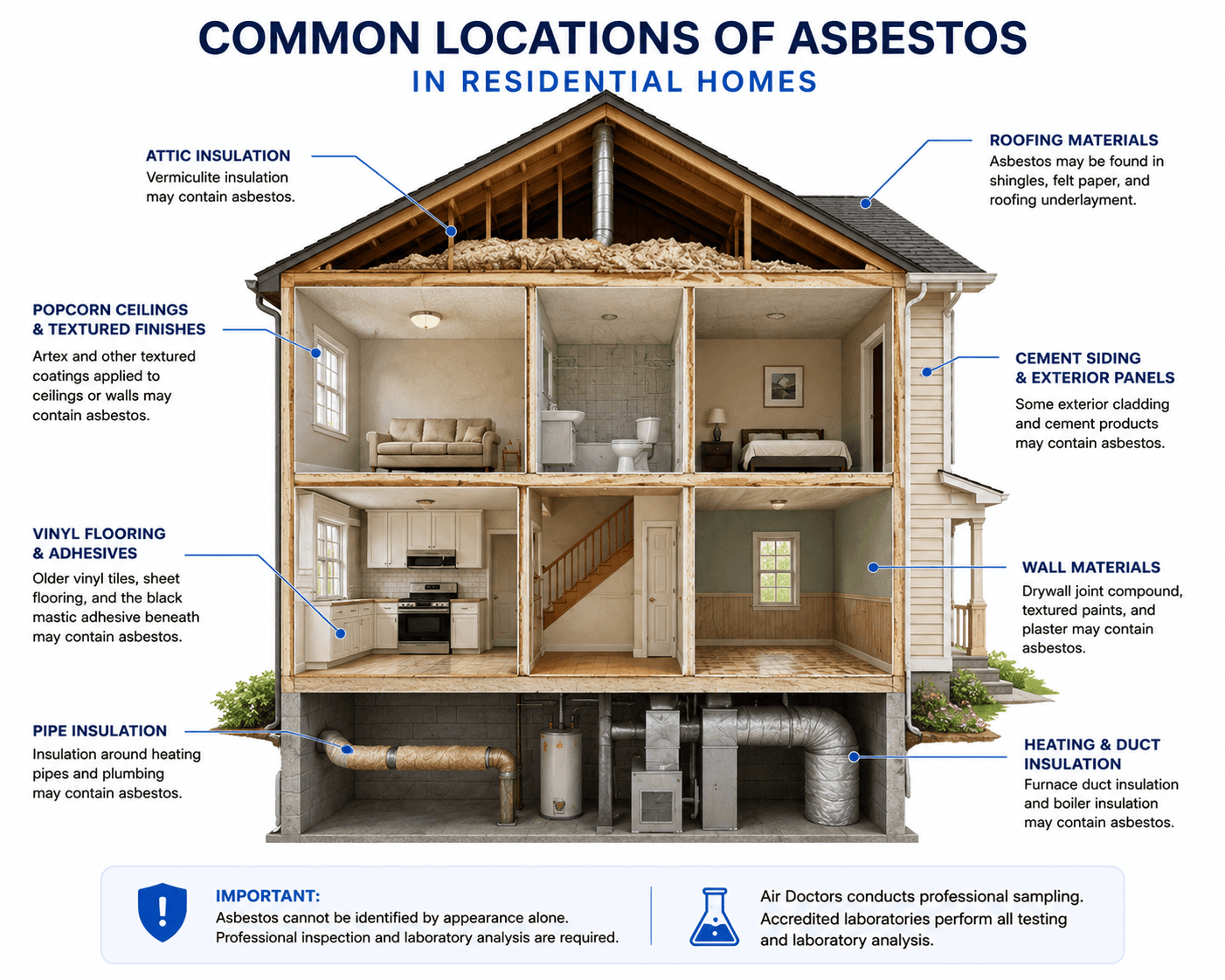
Many residential building materials manufactured before the late twentieth century were designed to improve durability, insulation, or fire resistance. While not every older material contains asbestos, several products are commonly associated with its historical use.
Potential locations include:
Popcorn ceilings and textured ceiling finishes
Vermiculite attic insulation
Vinyl floor tiles and sheet flooring
Flooring adhesives
Pipe insulation
Heating duct insulation
Cement siding and cement pipes
Roofing shingles and roofing felt
Drywall joint compounds
Textured wall coatings
Furnace components
Older insulation around boilers and heating systems
The likelihood of asbestos being present depends on several factors, including the age of the home, renovation history, and the original building materials installed. Materials manufactured during the same period may vary significantly between homes, making visual identification unreliable.
For homeowners planning renovations, identifying these materials before work begins can help avoid unexpected delays and support safer project planning.
What Does Asbestos Look Like?
One of the most common misconceptions is that asbestos can be identified simply by looking at it. In reality, asbestos fibres are microscopic, and many asbestos-containing materials closely resemble products that contain no asbestos.
For example, two popcorn ceilings may appear identical even though only one contains asbestos. The same is true for vinyl flooring, pipe insulation, drywall compounds, and vermiculite insulation. Colour, texture, and age alone cannot confirm whether a material contains asbestos.
Instead of relying on visual appearance, professionals evaluate several factors during an asbestos inspection, including:
The age of the home
The type and condition of suspect materials
Previous renovations or repairs
Areas where asbestos-containing materials were commonly installed
Whether representative sampling is appropriate
When sampling is recommended, trained professionals carefully collect small material samples in accordance with established safety procedures. Those samples are then submitted to accredited laboratories for analysis to determine whether asbestos fibres are present. Air Doctors performs the inspection and sampling process, while accredited laboratories complete all laboratory testing and analysis.
Understanding the limitations of visual asbestos identification helps homeowners avoid unnecessary assumptions and supports informed decisions before renovation, demolition, or major repair work begins.
Signs Your Home May Contain Asbestos
Many homeowners first become concerned about asbestos when planning renovations or purchasing an older property. While a home’s age can be an important indicator, it should never be the only factor considered. Building materials, prior renovations, and the condition of those materials all contribute to determining whether a professional asbestos inspection is appropriate.
The presence of one or more of the following signs does not confirm the presence of asbestos. Instead, they indicate that a professional inspection and, where appropriate, material sampling may be recommended before disturbing suspect materials.
Homes Built Before Modern Asbestos Restrictions
Homes constructed before asbestos use was phased out are more likely to contain asbestos-containing materials. Common products from that period include ceiling textures, insulation, flooring, roofing materials, and pipe insulation.
Even if a home has undergone renovations, some original materials may remain behind walls, above ceilings, or beneath newer finishes.
Popcorn Ceilings or Textured Finishes
Decorative textured ceilings were widely installed in many Ontario homes for several decades. Some older popcorn ceilings incorporated asbestos to improve durability and fire resistance.
Because visually similar ceiling finishes may or may not contain asbestos, professional popcorn ceiling asbestos testing is the only reliable way to confirm whether asbestos is present before renovation or removal.
Vermiculite Insulation in the Attic
Loose fill vermiculite insulation is another material that frequently raises concerns in older homes. Some historical vermiculite products were sourced from mines that also contained naturally occurring asbestos.
If vermiculite insulation is present, professional sampling followed by accredited laboratory analysis can determine whether asbestos fibres are present. Air Doctors performs the inspection and sampling, while accredited laboratories complete the analysis.
Older Vinyl Flooring and Adhesives
Certain vinyl floor tiles, sheet flooring, and flooring adhesives manufactured decades ago may contain asbestos. During renovation projects, these materials are often uncovered beneath newer flooring, making an asbestos inspection an important step before demolition begins.
Pipe and Heating System Insulation
Older heating systems sometimes include insulation wrapped around hot water pipes, boilers, or ductwork. Depending on the home’s age and construction, these materials may warrant a professional assessment before repair or replacement work.
Previous Renovations With Unknown Materials
Not every renovation removes older construction materials. In many homes, new finishes are simply installed over existing products. This means original asbestos-containing materials may remain concealed beneath newer flooring, drywall, or ceiling finishes.
If renovation records are unavailable, a professional asbestos inspection can help identify areas that may require further evaluation.
Visible Damage to Older Building Materials
Cracked ceiling textures, deteriorating insulation, broken flooring, or damaged wall materials may require additional assessment before repairs begin. Rather than attempting to identify the material visually, homeowners should leave suspect materials undisturbed until they have been professionally inspected.
Popcorn Ceiling Asbestos
Why Popcorn Ceilings Continue to Raise Questions
Popcorn ceilings remain one of the most commonly discussed residential materials when homeowners research asbestos. These textured finishes were widely used because they helped hide surface imperfections while providing acoustic and decorative benefits. Depending on when the ceiling was installed, some products contained asbestos, while many others did not.
Because appearance alone cannot distinguish between asbestos-containing and non-asbestos ceiling textures, professional asbestos identification is recommended before renovation or removal work begins.
Do All Popcorn Ceilings Contain Asbestos?
No. Not every popcorn ceiling contains asbestos.
The likelihood depends on several factors, including:
The age of the home
When the ceiling was installed
The specific ceiling product used
Whether the ceiling has been replaced or renovated
Many homes have popcorn ceilings that contain no asbestos. Others may have textured coatings that were manufactured during periods when asbestos was commonly incorporated into building materials.
For this reason, assumptions based on appearance or construction date alone can be misleading. Professional sampling provides a reliable way to determine whether asbestos is present.
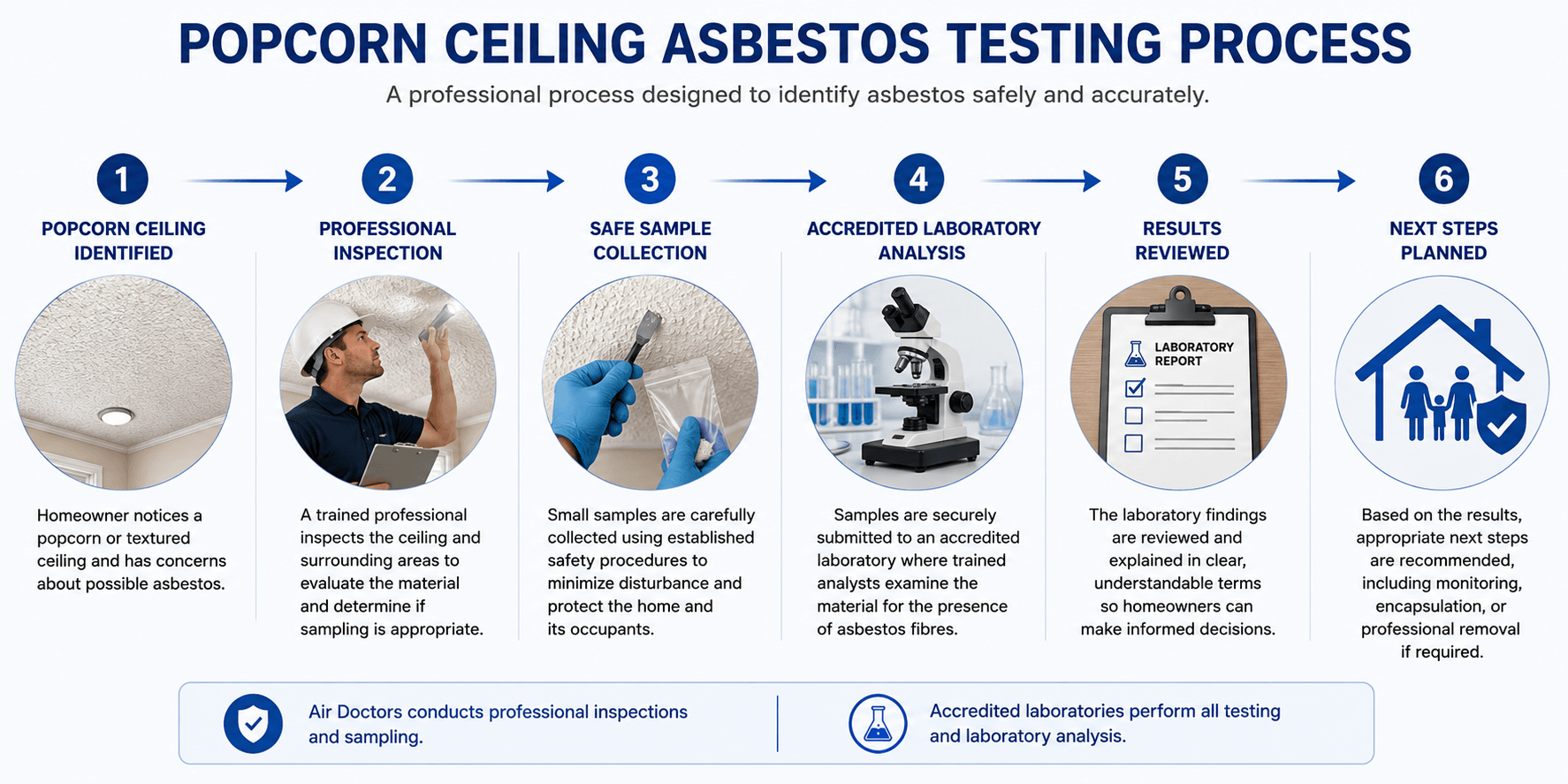
How Popcorn Ceiling Asbestos Testing Works
When a popcorn ceiling is suspected of containing asbestos, the process typically follows several steps designed to minimize disturbance while obtaining representative samples.
The process generally includes:
A visual inspection of the ceiling and surrounding areas.
Identification of locations suitable for sample collection.
Careful collection of small material samples in accordance with established safety procedures.
Submission of samples to an accredited laboratory for analysis.
Review of the laboratory findings.
Recommendations based on the confirmed results.
Air Doctors conducts professional inspections and material sampling. Accredited laboratories perform all asbestos testing and laboratory analysis before results are shared with the homeowner.
If asbestos is confirmed, homeowners can then evaluate appropriate management options, including leaving the material undisturbed, encapsulation where suitable, or professional removal depending on the material’s condition and any planned renovation work.
Vermiculite Testing for Homeowners
Why Vermiculite Insulation Requires Professional Assessment
Vermiculite insulation was commonly installed in attics to improve thermal performance and fire resistance. While vermiculite itself is a naturally occurring mineral, some products were sourced from mines that also contained asbestos. As a result, certain vermiculite insulation products may contain asbestos fibres, while others may not.
Vermiculite insulation typically appears as loose fill material consisting of small, lightweight granules. The particles are usually gold, silver, brown, or grey and have a layered appearance that expands when heated.
Although these characteristics help identify vermiculite insulation, they do not indicate whether asbestos is present. Only accredited laboratory analysis can confirm the presence or absence of asbestos fibres.
When Should Vermiculite Insulation Be Evaluated?
Professional evaluation may be appropriate if:
Loose fill insulation is present in the attic.
The home’s construction predates modern asbestos restrictions.
Attic renovations or insulation replacement are being planned.
A home inspection identifies vermiculite insulation.
The insulation has been disturbed or damaged.
A property purchase requires additional environmental information.
Early assessment helps homeowners avoid unexpected renovation delays and supports informed planning before work begins.
How Vermiculite Testing Works
The vermiculite testing process follows a structured approach designed to minimize disturbance while obtaining representative samples.
The process typically includes:
A professional inspection of the attic insulation.
Identification of appropriate sampling locations.
Careful collection of representative insulation samples.
Submission of samples to an accredited laboratory.
Laboratory analysis for asbestos fibres.
Review of the results and recommendations based on the findings.
Air Doctors conducts the inspection and professional sampling process. Accredited laboratories perform all testing and laboratory analysis before results are provided to the homeowner.
Why Professional Vermiculite Testing Matters
Professional vermiculite testing helps homeowners:
Plan renovations with greater confidence.
Understand whether asbestos-containing materials are present.
Make informed decisions about remediation, if required.
Reduce the likelihood of unexpected project interruptions.
Whether preparing for renovations, purchasing an older home, or replacing attic insulation, a professional assessment provides reliable information to support safer decision-making.
Professional Sampling vs DIY Asbestos Testing
Why Professional Assessment Provides More Reliable Information
Homeowners often wonder whether an asbestos testing kit or self-collected sample can provide the same level of confidence as a professional asbestos inspection. While some laboratory services may accept homeowner-submitted samples, collecting samples without proper procedures can unnecessarily disturb suspect materials and may not produce representative results.
Professional asbestos testing begins long before a sample reaches the laboratory. It includes identifying suspect materials, determining appropriate sampling locations, safely collecting representative samples, and interpreting laboratory findings in the context of the home’s construction and renovation plans.
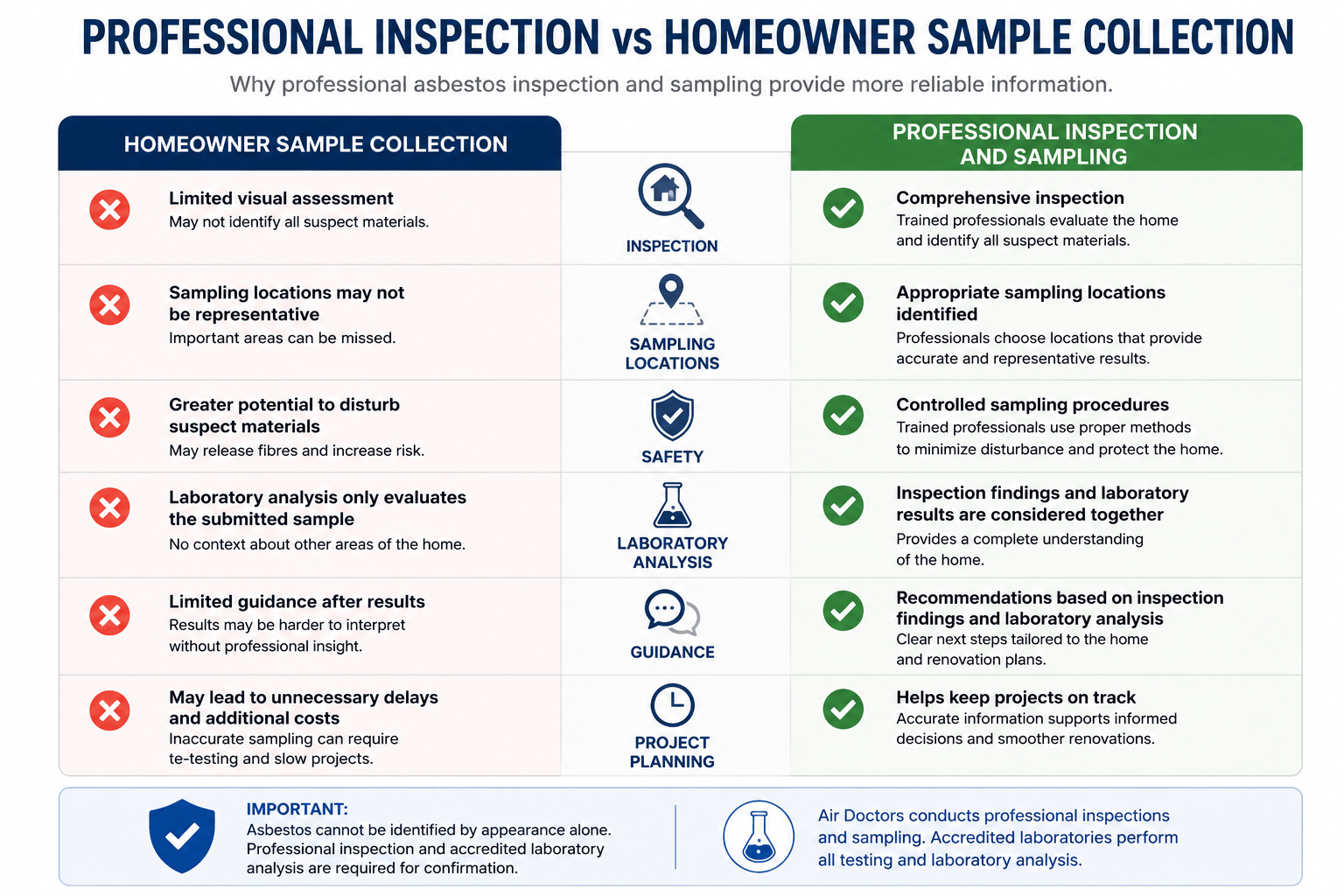
Comparing the Two Approaches
Homeowner Sample Collection
Professional Asbestos Inspection and Sampling
Limited visual assessment
Comprehensive inspection of suspect materials
Sampling locations may not be representative
Appropriate sampling locations identified by trained professionals
Greater potential to disturb suspect materials
Controlled sampling procedures designed to minimize disturbance
Laboratory analysis only evaluates the submitted sample
Inspection findings and laboratory results are considered together
Limited guidance after results
Recommendations based on inspection findings and laboratory analysis
Regardless of who collects the sample, asbestos confirmation always depends on accredited laboratory analysis. Air Doctors performs professional inspections and material sampling, while accredited laboratories complete all testing and laboratory analysis.
For most homeowners, a professional asbestos inspection offers a more complete understanding of the property’s condition and helps identify materials that may otherwise be overlooked.
What Happens If Asbestos Is Found?
Understanding the Next Steps After Laboratory Confirmation
Receiving confirmation that asbestos is present does not necessarily mean immediate removal is required. The appropriate course of action depends on several factors, including the condition of the material, its location within the home, and whether renovation or repair work is planned.
Once accredited laboratory analysis confirms the presence of asbestos, homeowners can review the findings and, with qualified professionals, determine the most appropriate management strategy.
The next steps often include:
Reviewing the laboratory report.
Evaluating the condition of the asbestos-containing material.
Determining whether the material will remain undisturbed.
Assessing planned renovations or demolition work.
Developing a remediation plan if necessary.
If removal is recommended, the remediation process generally includes containment measures, professional removal, appropriate disposal, and air clearance sampling before the work area is returned to normal use. Air Doctors provides residential asbestos removal and air clearance sampling, while accredited laboratories continue to perform the laboratory analysis associated with the process.
Professional planning helps homeowners understand available options while minimizing disruption to renovation schedules and supporting a safe residential environment.
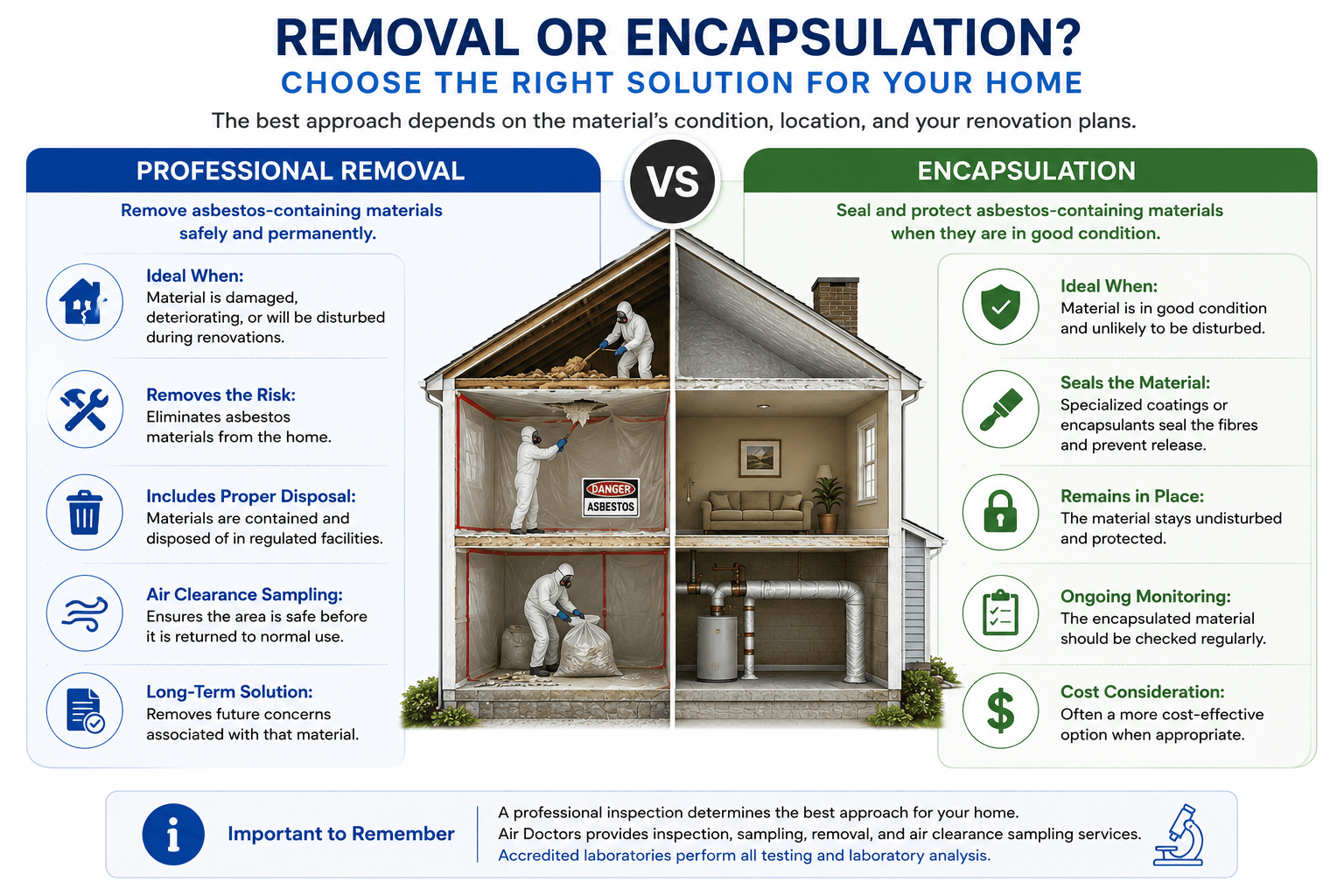
Asbestos Removal vs Encapsulation
Understanding the Two Most Common Management Options
If asbestos is confirmed through an accredited laboratory analysis, the next step is to determine how the material should be managed. In residential properties, the most appropriate solution depends on the material’s condition, location, accessibility, and whether future renovation work is planned.
Professional removal is typically followed by thorough cleaning, proper disposal of regulated materials, and air clearance sampling before the area is returned to normal use. Air Doctors provides residential asbestos removal and air clearance sampling as part of its remediation services. Accredited laboratories continue to perform any laboratory analysis associated with the process.
What Is Encapsulation?
Encapsulation is a management method that seals or isolates asbestos-containing materials to reduce the likelihood of fibre release while leaving the material in place.
Depending on the situation, encapsulation may be considered when:
The material remains in good condition.
It is unlikely to be disturbed.
Removal is not necessary based on the property’s current use.
A professional assessment determines it is an appropriate management strategy.
Encapsulation is not suitable for every situation. A professional inspection helps determine whether the material can safely remain in place or whether removal provides the more appropriate long-term solution.
Comparing Removal and Encapsulation
Professional Removal
Encapsulation
Removes confirmed asbestos-containing materials from the home
Leaves the material in place while managing exposure risk
Often recommended before major renovations
May be appropriate when materials remain intact and undisturbed
Eliminates future concerns associated with that material
Requires the encapsulated material to remain protected
May involve containment, disposal, and air clearance sampling
Requires ongoing monitoring if the material remains in place
The appropriate approach depends on the home’s condition and future renovation plans rather than a single solution for every property.
Cost of Asbestos Testing and Inspection
What Factors Influence Residential Inspection Costs?
One of the most common questions homeowners ask is how much an asbestos inspection or asbestos testing will cost. While every property is different, inspection costs are generally influenced more by the amount of sampling required than by a single standard price.
Because each home contains different materials, construction methods, and renovation histories, a professional inspection helps determine the scope of work before samples are collected.
Common factors that influence costs include:
Number of Suspect Materials
A home containing multiple suspect materials may require more representative samples than one where only a single material is being evaluated.
Examples include:
Popcorn ceilings
Vermiculite insulation
Vinyl flooring
Pipe insulation
Drywall compounds
Accessibility of the Materials
Materials located in confined attics, crawl spaces, basements, or difficult-to-access areas may require additional time during the inspection process.
Size of the Home
Larger homes often contain more building materials and may require a broader inspection, particularly before extensive renovation projects.
Scope of the Renovation
A small bathroom renovation may require fewer samples than a whole-home renovation where several building materials will be disturbed.
Laboratory Turnaround Time
After samples are collected, accredited laboratories analyze the materials and issue the laboratory findings. Standard and expedited laboratory turnaround options may influence the overall project timeline.
Why an Inspection Can Help Avoid Unexpected Costs
Scheduling a professional asbestos inspection before renovations begin can help homeowners:
Identify asbestos-containing materials before demolition.
Reduce unexpected construction delays.
Support renovation planning.
Prevent unnecessary disruption once work has started.
Make informed decisions using accredited laboratory results.
Because every property is unique, inspection costs are best determined after understanding the home’s construction, renovation plans, and the number of materials to be evaluated.
Why Professional Asbestos Inspections Matter
Helping Homeowners Make Informed Decisions Before Renovations
Professional asbestos inspections provide more than laboratory results. They help homeowners understand where suspect materials are located, determine whether sampling is appropriate, and support informed decisions before renovation or repair work begins.
A structured inspection can help:
Identify materials that may require further evaluation.
Reduce uncertainty before renovation projects.
Support property purchases and home inspections.
Minimize unexpected project delays.
Guide appropriate remediation planning when asbestos is confirmed.
Professional inspections also provide important context that laboratory analysis alone cannot. Inspection findings, the condition of the material, and future renovation plans are all considered when determining the most appropriate next steps.
Throughout the process, Air Doctors performs residential inspections, professional sampling, remediation, and air clearance sampling. Accredited laboratories independently perform all testing and laboratory analysis, ensuring homeowners receive reliable information before making decisions about their property.
Why Homeowners Choose Air Doctors for Residential Asbestos Services
Choosing an asbestos inspection company involves more than comparing service offerings. Homeowners need a provider that understands residential construction, follows established safety procedures, and clearly explains each stage of the inspection and remediation process.
Since 2009, Air Doctors has helped homeowners address asbestos concerns in older homes through professional inspections, material sampling, residential asbestos removal, and air clearance sampling. Every project begins with understanding the property’s condition before recommending the appropriate next steps.
Air Doctors focuses exclusively on residential environmental remediation, helping homeowners prepare for renovations, property purchases, and home improvements while minimizing unnecessary disruption. Throughout the process, Air Doctors performs inspections, professional sampling, remediation, and air clearance sampling. Accredited laboratories independently perform all testing and analysis, ensuring homeowners receive reliable, unbiased results.
Homeowners choose Air Doctors because of its commitment to:
Residential asbestos inspection services
Professional asbestos sampling
Residential asbestos removal
Popcorn ceiling asbestos removal
Vermiculite insulation removal
Air clearance sampling following remediation
Clear communication throughout the inspection and remediation process
Service across Newmarket, Scarborough, Markham, Durham, Oshawa, Sunderland, Beaverton, Cobourg, and surrounding Ontario communities
Whether preparing for a renovation or addressing concerns about older building materials, homeowners benefit from a professional assessment that provides the information needed to move forward confidently.
Supporting Safer Renovation Decisions Through Professional Asbestos Testing
Older homes often contain building materials that deserve careful evaluation before renovation, demolition, or major repairs begin. Professional asbestos testing provides homeowners with reliable information about suspect materials, helping reduce uncertainty and support informed planning.
From popcorn ceilings and vermiculite insulation to older flooring and pipe insulation, understanding whether asbestos-containing materials are present allows homeowners to make appropriate decisions based on accredited laboratory findings rather than assumptions. Throughout this process, professional inspections and representative sampling play an essential role in identifying potential concerns before work begins.
Air Doctors supports homeowners across Newmarket, Scarborough, Markham, Durham, Oshawa, Sunderland, Beaverton, Cobourg, and surrounding communities with residential asbestos inspections, professional sampling, residential asbestos removal, and air clearance sampling. Accredited laboratories independently perform all testing and laboratory analyses, providing reliable results to guide the next steps.
Ready to Learn More?
If an older home contains suspect building materials or a renovation project is being planned, contact Air Doctors to schedule a professional residential asbestos inspection. Professional sampling, combined with accredited laboratory analysis, provides the information needed to move forward safely and confidently.
Andre Kern is a seasoned business leader and President of Air Doctors Inc., a Canadian company specializing in environmental hazard remediation, including asbestos removal and mould remediation. He oversees the company’s strategic direction, operations, and financial performance, bringing a strong focus on safety, compliance, and service quality across ...
Read More
Frequently Asked Questions About Residential Asbestos Testing
Asbestos cannot be confirmed by appearance alone. Professional inspections identify suspect materials, and representative samples are collected where appropriate. Accredited laboratories then analyze those samples to determine whether asbestos fibres are present. Air Doctors performs inspections and sampling, while accredited laboratories complete all testing and laboratory analysis.
No. Some older popcorn ceilings contain asbestos, while many do not. The age of the ceiling and the products originally used influence whether asbestos may be present. Professional sampling and accredited laboratory analysis provide confirmation.
An asbestos inspection involves identifying suspect materials and determining whether sampling is appropriate. If samples are collected, they are submitted to an accredited laboratory for analysis. Together, the inspection findings and laboratory results help determine the next steps.
No. Vermiculite itself does not always contain asbestos. However, some historical vermiculite insulation products originated from sources where asbestos was naturally present. Laboratory analysis is required to determine whether asbestos fibres are contained within the insulation.
Not necessarily. The appropriate management approach depends on the condition of the material, its location, and whether it will be disturbed during renovations. In some situations, professional encapsulation may be appropriate, while in others it may be necessary to remove it.
Inspection times vary depending on the size of the home, the number of suspect materials, and the accessibility of those materials. After samples are collected, accredited laboratories complete the analysis, and the results are reviewed with the homeowner.
It is generally advisable to complete the inspection and receive laboratory results before disturbing suspect building materials. This helps support safer renovation planning and reduces the likelihood of unexpected project delays.
Once accredited laboratory analysis confirms the presence of asbestos, the material's condition and planned renovation work are evaluated. Based on those findings, homeowners may choose continued management, encapsulation where appropriate, or professional removal.