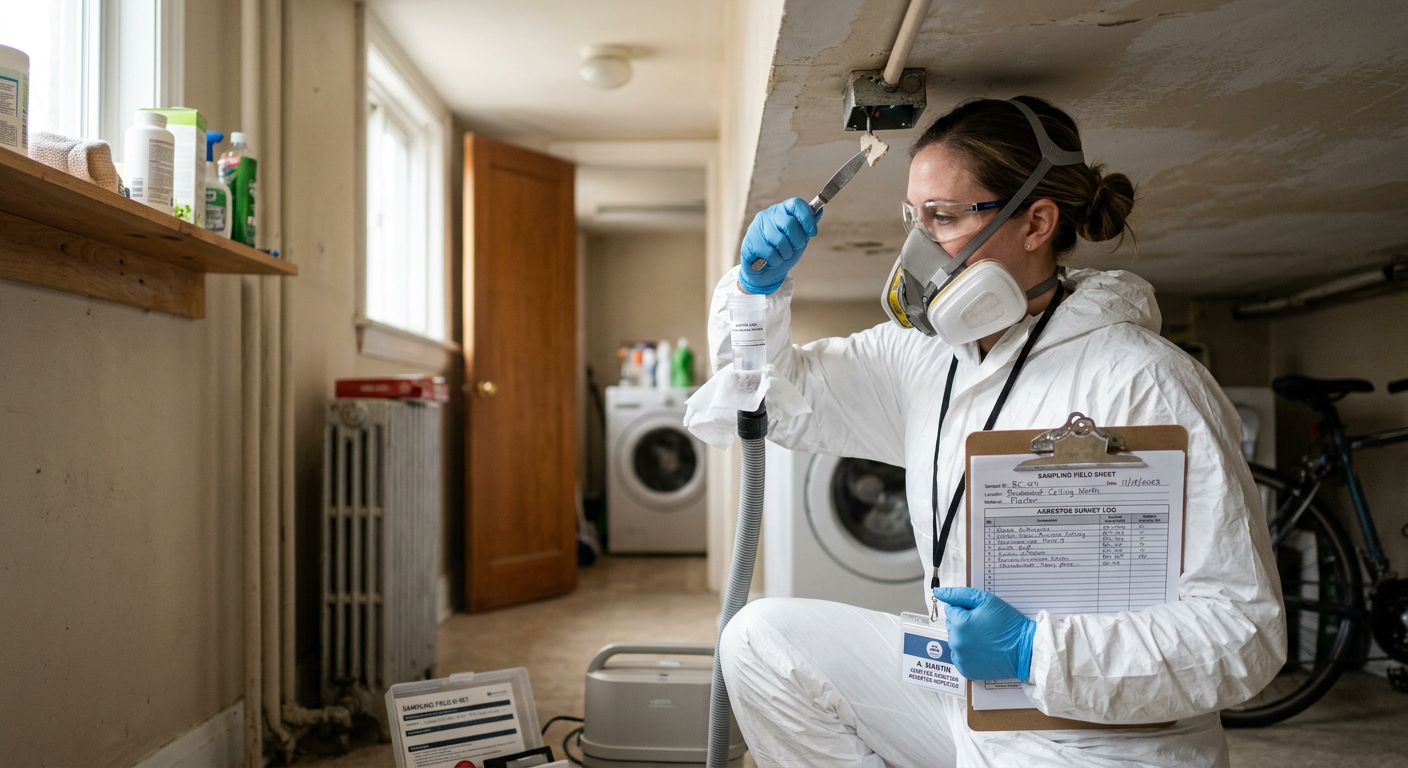
Older residential properties in Scarborough, Woodbine, and Cobourg may contain asbestos-containing building materials. When disturbed, asbestos fibres can become airborne, posing health risks. Proper asbestos inspection and testing help residential property owners make informed decisions before renovation, demolition, or ongoing occupancy.
Understanding the two types of home asbestos testing for residential settings helps protect both property value and occupant safety.
People Also Ask (PAAs)
What are the two types of asbestos testing for residential properties?
The two common types are building management asbestos testing and pre-construction asbestos testing. Building management testing documents asbestos-containing materials in occupied properties, while pre-construction testing identifies materials that may be disturbed during renovation or demolition.
Is asbestos testing required before home renovation in Canada?
Yes. Before renovation or demolition in older residential properties, asbestos inspection and sampling are typically required to identify materials that may contain asbestos and ensure safe handling in compliance with regulations.
Why Asbestos Testing Is Essential for Residential Properties
Asbestos was widely used in insulation, floor tiles, ceiling textures, drywall compounds, and pipe wrap. Many homes built before 1990 may still contain asbestos.
Residential asbestos testing supports:
- Safe renovation planning
- Accurate risk assessment
- Compliance with Canadian safety regulations
- Protection of occupants during repairs
Without a proper asbestos inspection and sampling, hidden materials can be accidentally disturbed. That risk increases during basement renovations, kitchen upgrades, or ceiling removal in older homes in Oshawa or Scarborough.
Type 1 – Building Management Asbestos Testing
Building management asbestos testing focuses on identifying and documenting asbestos-containing materials in occupied residential properties.
This type of home asbestos testing and inspection is common in:
- Multi-unit residential buildings
- Rental properties
- Older condominium complexes
The goal is not immediate removal. Instead, it involves:
- Identifying locations of asbestos-containing materials
- Assessing material condition
- Creating records for property management
- Supporting long-term monitoring
If materials remain intact and undisturbed, management plans can reduce risk without unnecessary removal. This approach protects residents in Markham, Durham, and Cobourg by preventing accidental exposure during routine maintenance.
Type 2 – Pre-construction Asbestos Testing
Pre-construction asbestos testing takes place before:
- Renovation
- Demolition
- Structural modification
- Major system upgrades
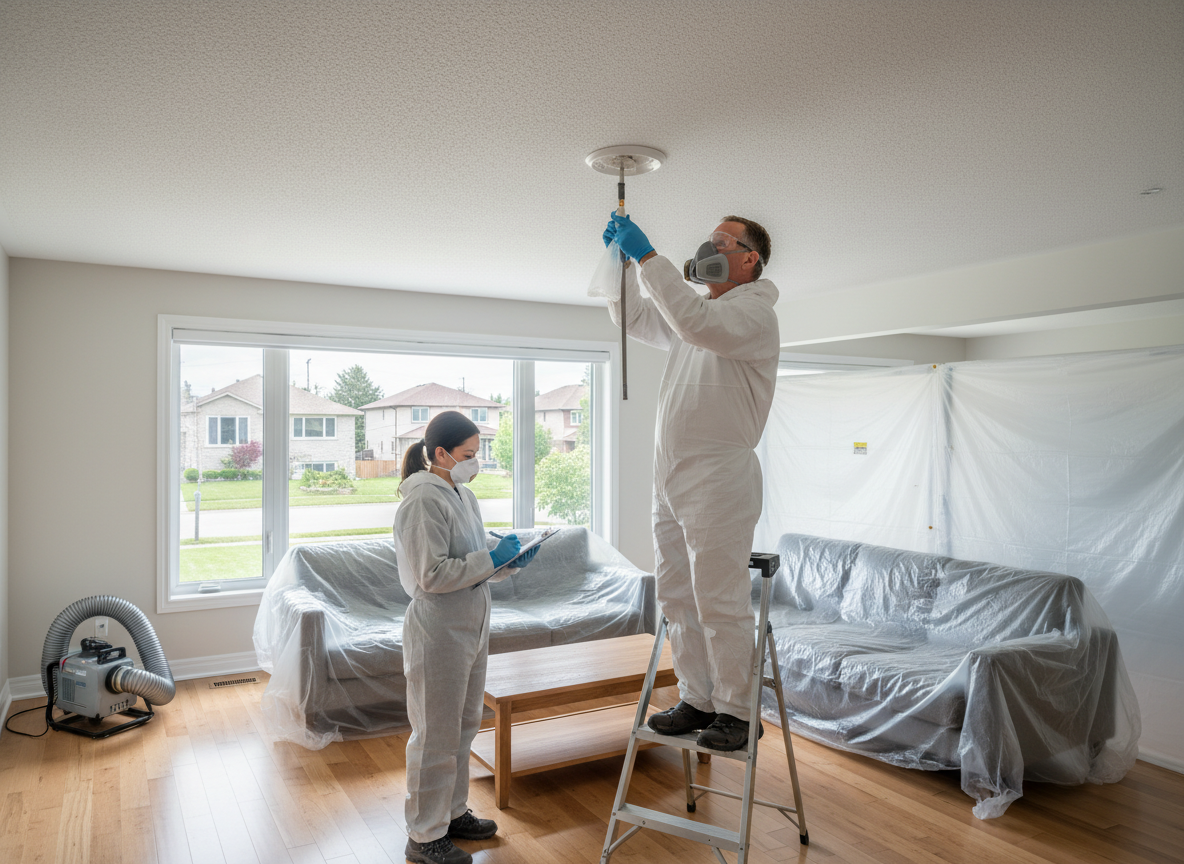
This type of asbestos inspection is more detailed. It identifies materials that may be disturbed during construction activity.
Pre-construction sampling typically includes:
- Opening concealed spaces
- Sampling drywall compounds
- Testing floor tiles and adhesives
- Examining ceiling textures and insulation
Homes in Newmarket, Sunderland, or Beaverton undergoing upgrades often require this level of asbestos testing to meet regulatory requirements.
Failure to complete pre-construction inspection and sampling can lead to project delays, safety risks, and unexpected remediation costs.
Building Management Vs. Pre-Construction – Key Differences
While both types involve asbestos sampling and laboratory analysis, their objectives differ.
Building management asbestos testing:
- Focuses on documentation
- Supports safe occupancy
- Monitors known materials
- Does not assume disturbance
Pre-construction asbestos testing:
- Focuses on planned disturbance
- Requires intrusive sampling
- Identifies hidden materials
- Supports safe renovation planning
Residential property managers may require building management testing to maintain ongoing safety, while renovation projects require pre-construction testing.
When Residential Properties Need Both Types of Testing
Some residential properties benefit from both testing approaches.
Examples include:
- Older apartment buildings that are planning phased renovations
- Rental properties undergoing unit-by-unit upgrades
- Condominium buildings updating mechanical systems
In these situations:
- Building management testing establishes a baseline record.
- Pre-construction testing confirms conditions before each renovation phase.
This layered approach supports occupant safety and project efficiency across residential communities in Scarborough and Durham.
The Role of Certified Sampling and Laboratory Analysis
Accurate asbestos home inspection and testing depend on proper sampling and independent laboratory analysis.
Air Doctors conducts professional asbestos sampling during asbestos inspections. Samples are then sent to a certified laboratory for detailed analysis.
The laboratory performs:
- Microscopic examination
- Fibre identification
- Percentage determination
This separation protects integrity and ensures reliable results. Residential property owners in Cobourg or Markham receive laboratory-confirmed findings that guide safe decisions.
Proper containment procedures during sampling also reduce fibre release and maintain a safe environment during the inspection process.
Also Read:
What Does Asbestos Look Like? And How to Identify It
5 Hidden Places Asbestos Might Be Lurking in Your Home
The Science Behind Asbestos Sample Collection: Methods and Techniques
Home Protection Starts With Proper Testing
Asbestos does not always require immediate removal. What matters is accurate identification, condition assessment, and proper planning before disturbance.
The two types of asbestos testing work together to:
- Protect residents
- Support renovation safety
- Prevent unexpected exposure
- Maintain property value
Proper residential asbestos testing and inspection are critical first steps before renovation or material disturbance. Contact Air Doctors for more information about residential asbestos inspection and professional sampling.



Locations We Serve
© 2026 Air Doctors Inc. | Marketed By MacRAE'S -Local SEO Company