
Renovation and demolition projects in older homes across Scarborough, Markham, Oshawa, Durham, Newmarket, Sunderland, Beaverton, Woodbine, and Cobourg often raise concerns about hidden airborne hazards. Two materials that are frequently confused are asbestos and crystalline silica. While both can affect indoor air quality and health, they are not the same substance and require different handling approaches.
A clear understanding from asbestos removal contractors helps residential property owners make informed decisions before disturbing building materials.
What Is Asbestos?
Asbestos is a group of naturally occurring mineral fibres that were widely used in residential construction before the late 1980s.
Common locations in homes include:
- Popcorn ceilings
- Vinyl floor tiles
- Pipe insulation
- Vermiculite attic insulation
- Cement-based siding and panels
When left undisturbed, asbestos-containing materials may not pose an immediate risk. However, damage, cuts, or sanding during renovation can release microscopic fibres into the air. Prolonged inhalation is associated with serious respiratory illness.
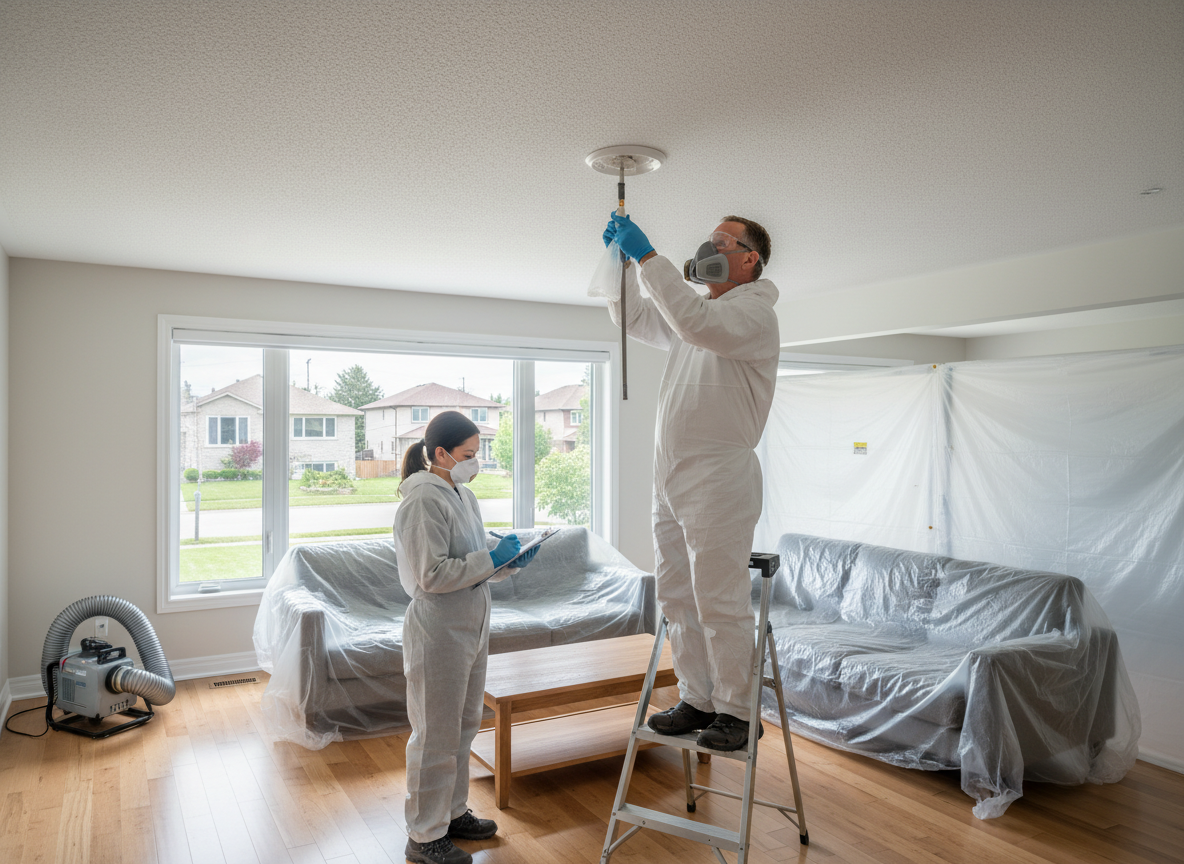
Because these fibres are not visible, professional sampling becomes necessary. A certified laboratory then analyzes samples to confirm its presence. Upon detection, the asbestos removal contractor addresses the issue.
What Is Crystalline Silica?
Crystalline silica is a natural mineral found in sand, stone, concrete, brick, and mortar. It becomes a concern when construction activities create fine dust.
In residential settings, silica dust may be generated during:
- Cutting concrete foundations
- Grinding tile adhesive
- Demolishing brick or stone
- Sanding drywall compound
Unlike asbestos, silica is not added to materials. It is already present in many common building products. The risk arises when mechanical disturbance releases respirable dust into the air.
Silica exposure is more common during active renovation or demolition rather than from aging materials alone.
Key Differences Between Asbestos and Crystalline Silica
Although both can affect lung health, they differ in structure, source, and risk pattern.
1. Material Type
- Asbestos: Fibrous mineral intentionally used in older products
- Crystalline Silica: A granular mineral naturally present in construction materials
2. Where Found
- Asbestos: Insulation, textured ceilings, floor tiles
- Crystalline Silica: Concrete, brick, mortar, stone
3. When Risk Occurs
- Asbestos: When asbestos-containing materials are disturbed
- Crystalline Silica: When cutting, grinding, or breaking materials, dust is created
4. Fibre vs. Dust
- Asbestos: Releases microscopic fibres
- Crystalline Silica: Releases fine mineral dust particles
5. Age of Property Relevance
- Asbestos: Risk is higher in older homes
- Crystalline Silica: Risk exists in both older and newer residential construction
These distinctions are important during pre-renovation planning in Scarborough, Oshawa, Cobourg, and surrounding communities.
Why Proper Identification Matters Before Renovation or Demolition
Renovation plans often involve removing walls, ceilings, flooring, or insulation. Without prior sampling, hazardous materials may be unknowingly disturbed.
Accurate identification helps:
- Protect household occupants
- Prevent contamination of living spaces
- Avoid project shutdowns
- Ensure safe removal procedures
Asbestos cannot be confirmed by visual inspection alone. Professional sampling is required, and laboratory analysis determines the final result. Silica risk, on the other hand, is typically assessed based on the materials being cut or demolished.
Understanding the difference reduces confusion and supports safer renovation planning in partnership with asbestos removal firms.
Can a Property Have Both Asbestos and Silica Risks?
In many residential renovation scenarios, both materials may be present.
For example:
- An older home may contain asbestos in the ceiling texture.
- Concrete basement cutting in the same property may release silica dust.
This combination is common during full interior remodels or structural alterations. Risk management strategies may need to address both fibre containment and dust control. Each material requires a distinct assessment and handling approach.
Also Read:
How to Choose Between Asbestos Removal and Encapsulation
6 Things Every Homeowner Should Know About Asbestos Removal
When Does Aging Roofing Materials Become Dangerous? Signs Highlighting the Need for Asbestos Removal
When Should Testing Be Requested?
Asbestos and crystalline silica are often grouped, but they are fundamentally different materials. One is a fibrous mineral used in older construction products. The other is a natural mineral found in many common building materials. Both can pose airborne risks when disturbed
Sampling should be considered when:
- Renovating a home built before the late 1980s
- Removing popcorn ceilings or old flooring
- Disturbing vermiculite insulation
- Planning demolition of interior walls
- Uncertainty exists about building material composition
For asbestos concerns in residential properties across Durham, Sunderland, or Beaverton, professional sampling can provide clarity. Samples are sent to a certified laboratory for analysis. Clear results allow renovation planning to proceed safely.
Before renovation or demolition in residential properties, proper sampling and identification help reduce uncertainty and protect indoor environments. For guidance on residential asbestos or mould sampling and removal, asbestos removal companies provide support backed by certified laboratory analysis. Contact Air Doctors completes residential asbestos and mould sampling across Scarborough, Markham, Oshawa, Durham, Newmarket, Sunderland, Beaverton, Woodbine, and Cobourg.



Locations We Serve
© 2026 Air Doctors Inc. | Marketed By MacRAE'S -Local SEO Company