Many homes and buildings built before 1990 in Canada may still contain asbestos. This material was once highly valuable for its durability, heat resistance, and fireproof qualities. It was a common choice for construction until it was proven to be highly toxic, making the services of asbestos removal contractors key.
With disturbances, asbestos releases tiny fibres into the air that can cause lung cancer, asbestosis, and mesothelioma upon inhalation. Knowing what asbestos looks like and understanding Canada’s safety regulations can help protect health and comply with the law.
What Is Asbestos?
Asbestos is a naturally occurring mineral made up of long, thin fibres. Its ability to resist heat, fire, and corrosion made it a popular material in Canadian construction for most of the twentieth century.
According to Health Canada (2024) and the Canadian Environmental Protection Act, 1999 (CEPA 1999), asbestos is classified as a toxic substance. It is now prohibited for new use in almost all forms under federal law.
What Does Asbestos Look Like?
Asbestos typically appears as fibrous, fluffy, or needle-like mineral threads embedded within other building materials. Depending on the type, its appearance may vary:
- Colour: White, blue, grey, brown, or green.
- Texture: Silky, cotton-like, or rough and brittle.
- Form: Often woven or mixed into cement, insulation, tiles, or fabrics.
It is not always possible to confirm the presence of asbestos solely based on appearance. Only laboratory analysis and asbestos removal contractors can provide a conclusive result.
Types of Asbestos and How to Identify Them
1. Chrysotile (White Asbestos)
Chrysotile is the most common type of asbestos used in Canadian homes and workplaces. It belongs to the serpentine group and was frequently used because of its flexibility and heat resistance.
- Appearance: White or light grey with fine, curly fibres.
- Texture: Soft, flexible, and layered.
- Density: Smooth and often woven into other materials.
- Common uses: Roofing sheets, vinyl tiles, insulation wraps, and ceiling coatings.
- Asbestos content: Between 40 and 95 percent, depending on the material.
- Fibre release potential: Moderate, but increases if damaged.
- Health risks: Prolonged exposure may cause lung scarring, lung cancer, and mesothelioma.
2. Amosite (Brown Asbestos) / Asbestos Insulating Board (AIB)
Amosite was heavily used in Asbestos Insulating Boards (AIB) and fire-resistant materials throughout Canada before 1980. It is part of the amphibole mineral group and contains coarse, brittle fibres.
- Also known as: AIB or Asbestolux.
- Appearance: Light to dark brown or grey.
- Composition: Often mixed with calcium silicate.
- Asbestos content: Around 15 to 25 percent.
- Texture: Medium to soft; easily breaks when handled.
- Fibre release potential: High. Fibres become airborne with minimal disturbance.
- Common uses: Include Ceiling tiles, fireproof panels, door linings, and wallboards.
- Health risks: High. Strongly associated with mesothelioma and asbestosis.
3. Crocidolite (Blue Asbestos)
Crocidolite is the most dangerous form of asbestos. Its sharp, needle-like fibres can easily penetrate deep into lung tissue and cause severe respiratory diseases.
- Appearance: Blue or blue-grey.
- Texture: Brittle and rough; easily sheds fibres
- Asbestos content: Between 25 and 50 percent.
- Fibre release potential: Extremely high.
- Common uses: Pipe insulation, cement sheets, spray coatings, and ship materials.
- Health risks: Severe. Linked to mesothelioma and chronic respiratory diseases.
4. Tremolite Asbestos
Tremolite asbestos had a few common applications. However, it still appears as a contaminant in other products such as vermiculite insulation or talc.
- Appearance: White to dark green with needle-like fibres.
- Texture: Brittle and rough.
- Asbestos content: Variable, depending on contamination level.
- Common uses: Found as an impurity in talc, vermiculite, and paint sealants.
- Fibre release potential: High when disturbed or aged.
- Health risks: Can cause asbestosis, lung cancer, and mesothelioma.
5. Anthophyllite Asbestos
Anthophyllite is a rare form of asbestos, typically found as a contaminant rather than a primary ingredient.
- Appearance: Grey or brown with fibrous crystals.
- Texture: Coarse and splintery.
- Asbestos content: Variable, often low concentration.
- Common uses: Limited industrial applications, some older cement or insulation materials.
- Fibre release potential: Moderate to high when disturbed.
- Health risks: Associated with asbestosis and mesothelioma after long-term exposure.
6. Actinolite Asbestos
Actinolite asbestos is another amphibole mineral that was never widely used but can occur in contaminated building materials.
- Appearance: Dark green or greenish-black with long, needle-like fibres.
- Texture: Hard and brittle, often blended with other minerals.
- Asbestos content: Varies by product.
- Common uses: Found in some insulation, sealants, and paints.
- Fibre release potential: Moderate to high when broken or aged.
- Health risks: Similar to other amphibole types, including lung disease and mesothelioma.
Common Materials That May Contain Asbestos
Homes built before the 1990s across Toronto and Durham Region may include asbestos-containing materials such as:
- Ceiling and wall plaster compounds
- Pipe and duct insulation
- Vinyl or linoleum floor tiles and adhesives
- Vermiculite attic insulation
- Cement siding or roofing shingles
- Textured ceiling coatings
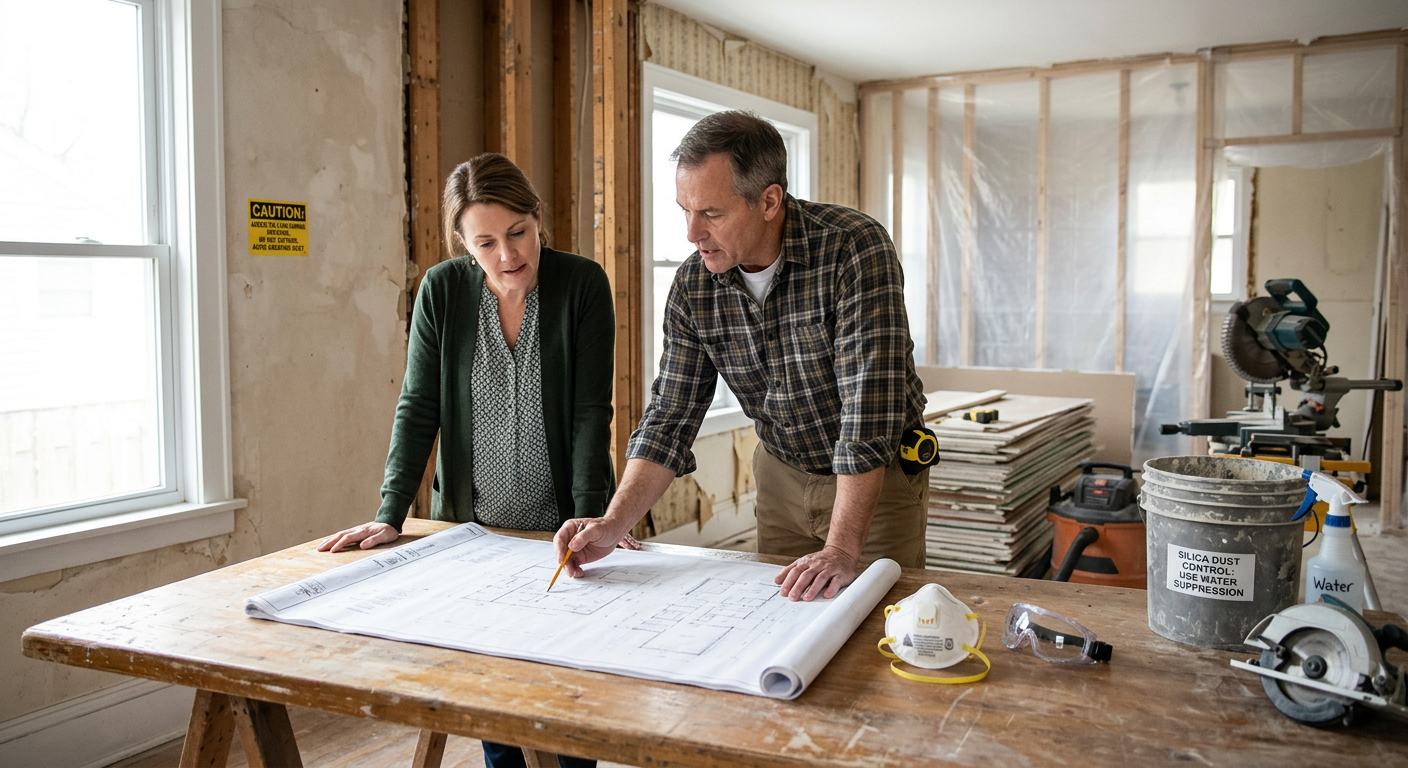
These materials are generally stable unless disturbed. Damage from renovation, drilling, sanding, or aging can release fibres into the air.
How to Identify Asbestos Safely
Identifying asbestos visually is unreliable and unsafe. Handling or attempting to remove suspicious materials can cause the release of fibres. Safe identification requires:
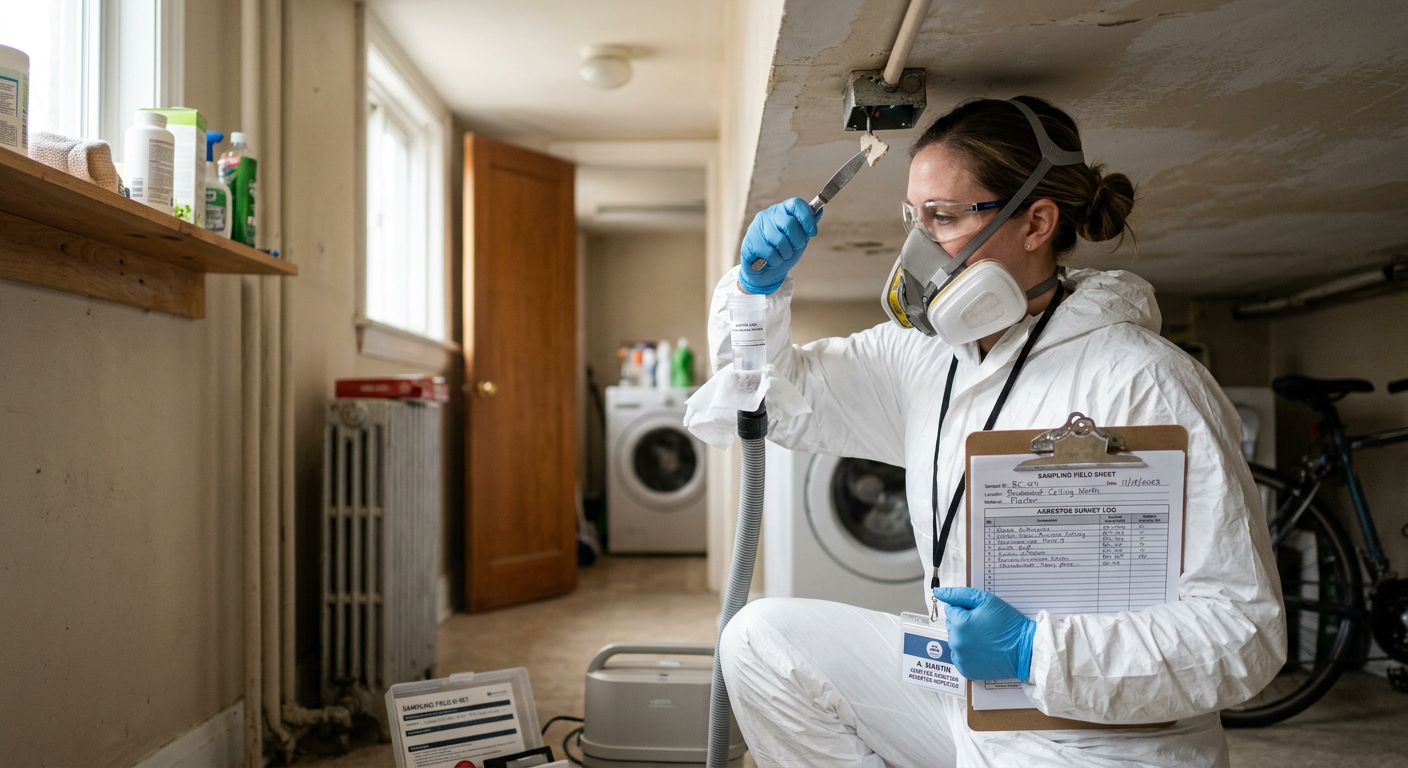
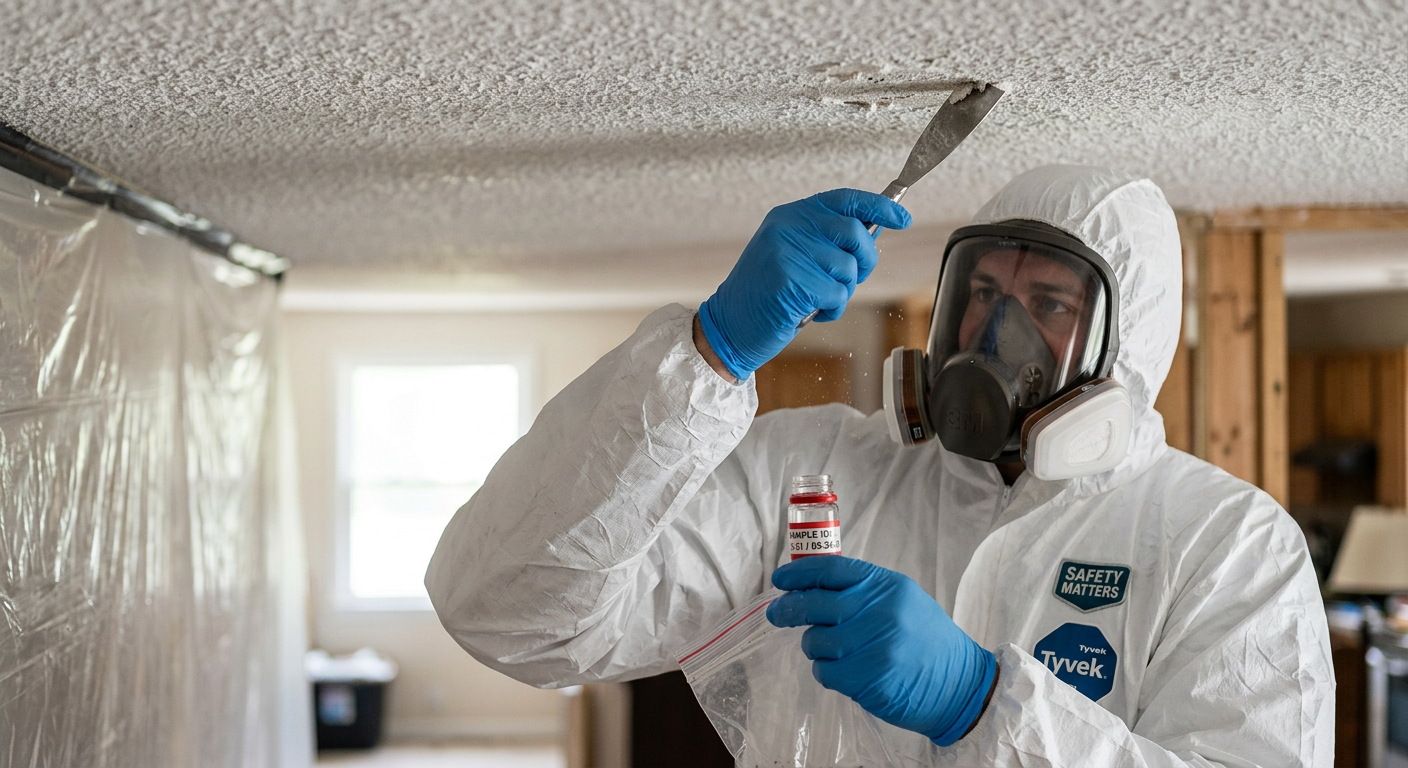
- Professional Sampling: A certified professional from asbestos removal companies collects samples safely using containment procedures.
- Laboratory Testing: The samples are sent to an accredited laboratory for analysis under a microscope.
- Result Interpretation: The lab provides a report confirming the presence of asbestos and its concentration.
Our team perform the sampling process only. Independent, accredited laboratories in Canada complete the actual testing and analysis to ensure accurate and unbiased results.
What to Do If Asbestos Is Suspected
When materials appear aged, crumbling, or damaged, a few simple steps can minimize risk:
- Avoid touching or disturbing the material.
- Restrict activity in the affected area until completing professional sampling.
- Schedule a qualified asbestos inspection to collect samples safely and accurately.
- Follow professional recommendations for removal or containment if asbestos is confirmed to be present.
This cautious, step-by-step approach keeps households in Toronto and Durham Region safe while ensuring compliance with Ontario’s asbestos regulations.
Professional Sampling Is the Only Safe Way to Confirm Asbestos
Asbestos can be hidden in many places within older Canadian homes, and guessing its presence can be hazardous. Professional sampling and accredited laboratory testing are the only reliable ways to confirm whether the material contains asbestos.
For peace of mind and safer living spaces, schedule an asbestos inspection with a reliable and licensed asbestos removal contractor. Our team has been serving homeowners across Toronto and the Durham Region with licensed sampling and trusted laboratory testing partnerships.
Book an asbestos inspection with our team today. Our certified professionals specialize in safe asbestos testing, inspection, and removal across Ontario. Contact us at 416-278-3902 or book an inspection online to ensure a property is free from asbestos and a safe environment.

Locations We Serve
© 2026 Air Doctors Inc. | Marketed By MacRAE'S -Local SEO Company